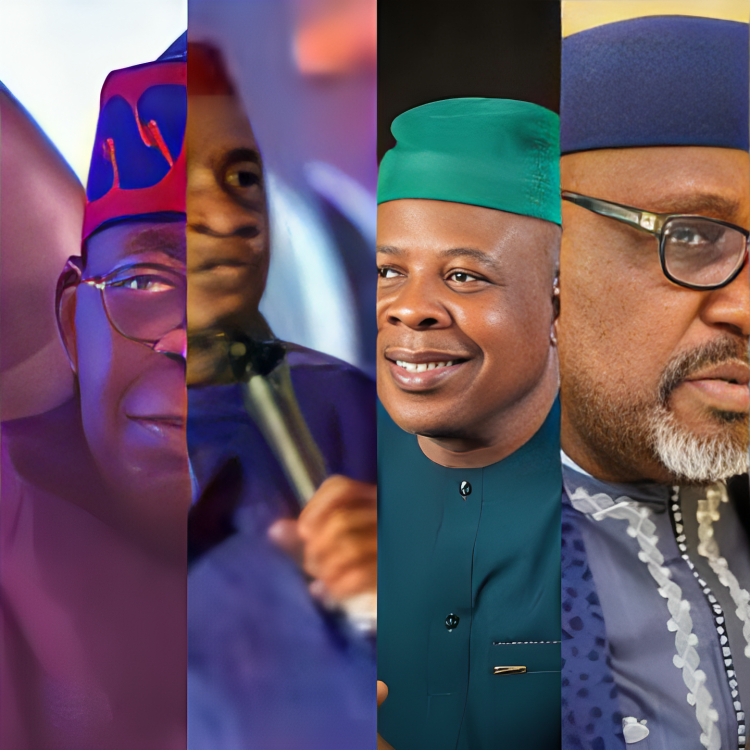
It has become a disturbing pattern in Imo State — a political culture of self-worship and narrow-minded leadership where politicians rise, rule, and vanish without leaving behind a single protégé or political structure beyond their family walls.
This failure to raise men and women, to groom successors or empower loyal foot soldiers, has turned Imo politics into a wasteland of transient ambition and shallow legacies.
Across Nigeria, strong political figures are often those who built institutions, raised followers, and invested in people. But in the South East, particularly in Imo State, politicians are notorious for doing the exact opposite. They do not build people; they build cliques. They do not mentor; they manipulate. And when they are out of office, their influence collapses like a house of cards.
In Imo today, you cannot point to any political figure who has deliberately groomed a capable mentee, or built a loyal base outside of his or her family, relations, or in-laws.
The pattern is painfully predictable: a politician rises, enjoys state power, surrounds himself with sycophants who survive on handouts, and the moment the patron leaves office, the empire crumbles. There is no legacy, no political family, no institutional continuity.
What many of these politicians forget is that politics, like business or religion, thrives on loyalty, structure, and the cultivation of human capital. Without followers who share your ideals and are empowered to carry on your political philosophy, you inevitably fade into irrelevance. This explains why Imo State is littered with the relics of former political giants who no longer command respect or influence, even in their own local governments.
Take President Bola Ahmed Tinubu as a case study. Love him or hate him, the man built people. Between 1999 and 2007, as governor of Lagos State, he assembled, trained, and empowered a generation of political technocrats and strategists who today dominate Nigeria’s political landscape.
His former Chief of Staff, Babatunde Fashola, became governor after him and later served as Minister of Works under Muhammadu Buhari. His former Commissioner for Justice, Yemi Osinbajo, rose to become Vice President of Nigeria.
Tinubu’s influence also produced Femi Gbajabiamila, whom he backed for the House of Representatives; Gbajabiamila later became Speaker and today serves as Chief of Staff to the President. Gboyega Oyetola, another of Tinubu’s protégés, became governor of Osun State and now serves as Minister of Blue Economy. Even the current Inspector General of Police, Kayode Egbetokun, once served as Tinubu’s Chief Security Officer when he was governor. And Lagos State’s current governor, Babajide Sanwo-Olu, once a civil servant, was groomed within the Tinubu political orbit. The list is endless.
None of these individuals were Tinubu’s blood relatives. He did not empower them because of family ties; he empowered them because of competence, loyalty, and vision. That is why today, he remains politically relevant and untouchable — a living example of how building people builds enduring power.
Compare this with Imo State, where former governors like Achike Udenwa and Rochas Okorocha are steadily fading into political oblivion. Despite their years in power, neither can boast of a single political mentee who has become a force in state or national politics. Their influence evaporated the moment they left office because they built no one — no lieutenants, no protégés, no credible successors. Their so-called loyalists were mere beneficiaries of handouts, not disciples of vision.
This absence of mentorship has turned Imo’s political terrain into a revolving door of opportunists — men and women who rise under one administration, disappear in the next, and resurface as political traders without ideology or loyalty. It explains the instability in the state’s political system — why alliances never last, and why politicians fight endlessly for crumbs instead of building institutions that endure.
The lesson is clear.Political power without human investment is fleeting. Money and influence may win elections, but only people — trained, empowered, and loyal — sustain a legacy. Until Imo politicians learn from Tinubu’s template of building men, not bloodlines, the state will continue to recycle failures masquerading as leaders.
In the final analysis, the tragedy of Imo politics is not that its leaders fail to rise, but that they never lift anyone else as they climb. They forget that the true measure of leadership is not how high you rise, but how many people rise because of you. That is why Tinubu remains relevant — and why many Imo politicians, for all their noise and wealth, have already become footnotes in history.