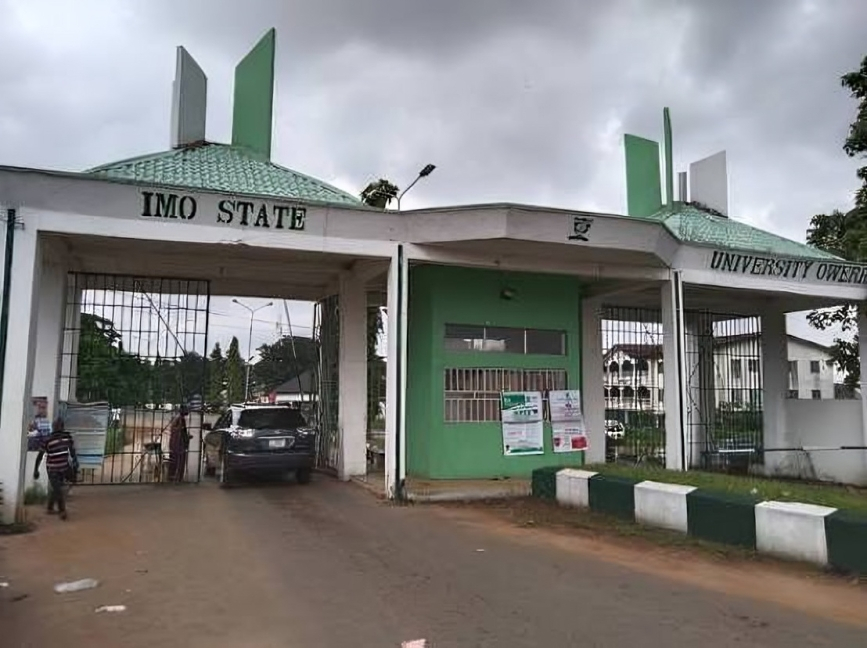
The Academic Staff Union of Universities (ASUU), Imo State University (IMSU), Owerri branch, has vowed to sustain its ongoing strike until the full implementation of the 2025 Federal Government-ASUU agreement and the resolution of outstanding welfare issues affecting its members. The union, which commenced the industrial action on August 10, 2026, said its demands remained unresolved despite several engagements with the university management and Governing Council. Addressing journalists at the university premises on Monday, October 26, ASUU-IMSU Chairperson, Comrade Stephen Oguji, declared that the union would not suspend the strike without concrete and verifiable commitments.
Oguji said the union had written seven letters to the university management, held two meetings with the administration, and sent three letters to the Governing Council, alongside two engagements with relevant stakeholders, without achieving a satisfactory resolution. He noted that about 12 universities embarked on similar strikes when IMSU’s action began, but several had since resolved their disputes. According to him, the 2025 agreement, signed in December 2025 and effective from January 1, 2026, had been implemented in federal universities and at least 26 states. “ASUU-IMSU is on strike, and the strike remains in force. The scheduling of examinations cannot erase this reality, nor can any administrative declaration substitute for a genuine resolution of the issues in dispute,” he said.
The union accused the university management of failing to address the dispute and alleged that some of its members had faced threats, arrest and detention. It also claimed that non-academic and casual staff had been used to conduct examinations during the industrial action. ASUU-IMSU further alleged that the Vice-Chancellor wrote to the university’s Visitor claiming that the union was not on strike, while the management scheduled second-semester examinations for the 2025/2026 academic session to begin on Monday. The union insisted that proceeding with examinations amid the unresolved dispute would not restore normal academic activities and called for the suspension of actions capable of worsening the crisis.
The lecturers said they were not opposed to dialogue but rejected what they described as repeated appeals without concrete commitments. They disclosed that meetings with the university management on August 27 and engagements with the Governing Council’s ASUU subcommittee on October 20 and 22 had failed to produce an acceptable settlement. The union outlined eight conditions for considering the suspension of the strike, including payment of September and October salaries at the new rate, a time-bound agreement on salary arrears from January to August 2026, the constitution of a committee to conduct elections for heads of departments, and the cancellation of examinations and postgraduate defences conducted during the strike. Other demands include guarantees against victimisation, payment of withheld salaries, settlement of outstanding postgraduate allowances and pension obligations, and resolution of unpaid Earned Academic Allowances.
ASUU-IMSU also raised concerns over the non-payment of September 2026 salaries to affected academic staff, claiming that non-academic staff had received their salaries. Oguji said the union had not received a satisfactory explanation for the alleged disparity, which he described as an additional burden on lecturers and their families during the prolonged dispute. He appealed to the relevant authorities to explain the situation and ensure that outstanding salaries were paid. The union also acknowledged the hardship caused by the strike to students and parents but argued that resolving the dispute, rather than conducting examinations amid the crisis, was the best way to protect students’ academic interests and restore confidence in the university’s educational processes.
The union called on the university’s Visitor, Governing Council and the Imo State Government to intervene and facilitate a lasting resolution, warning that the prolonged dispute could damage the academic calendar, institutional reputation, staff welfare and students’ academic progress. It maintained that any agreement to suspend the strike must contain written, measurable and time-bound commitments rather than assurances of future action. “We remain open to genuine dialogue, but any resolution must be credible, measurable and sustainable,” Oguji said, reaffirming the union’s determination to continue the industrial action until the 2025 agreement was implemented and outstanding issues addressed. “No retreat, no surrender,” he declared.