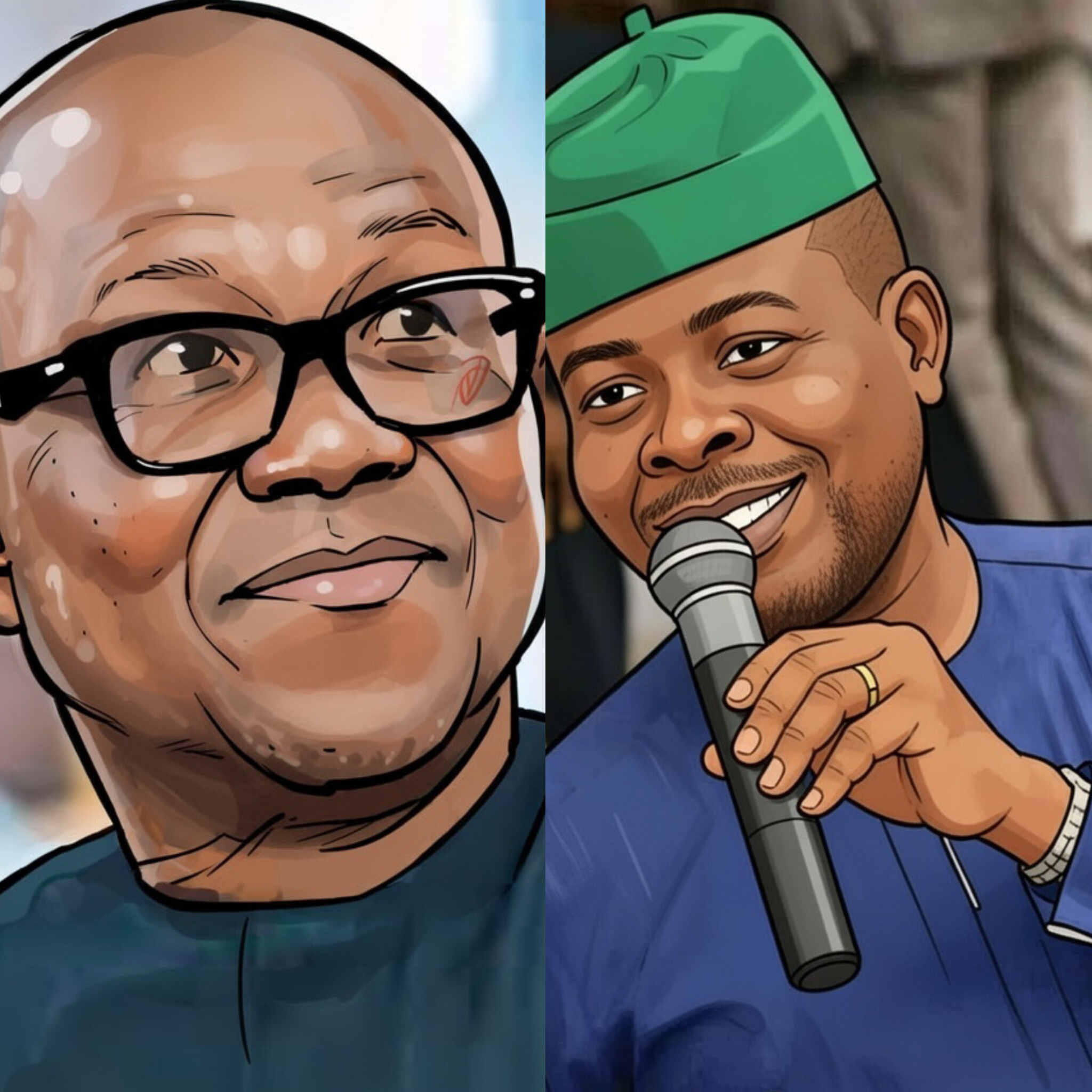
Within the African Democratic Congress (ADC), there is growing excitement over the possibility of Peter Obi finding a political home in the party. In Nigeria’s symbolism-driven political culture, Obi represents far more than a candidate; he is a political force multiplier. His name alone commands visibility, emotional loyalty, and moral capital. For a party still struggling to achieve national traction, such a development would amount to political oxygen. In Imo State, where perception often precedes structure, Obi’s open alignment with the ADC has already reshaped political calculations.
This analysis deliberately focuses on Imo State. The choice is both analytical and personal. As an indigene of the state who has closely observed its political evolution—marked by elite betrayals, judicial interventions, shifting alliances, and unfinished political journeys—no unresolved narrative looms larger than that of Emeka Ihedioha. The former governor was removed by the Supreme Court in January 2020 and replaced by Hope Uzodimma of the All Progressives Congress (APC).
Ihedioha’s renewed ambition to return to Douglas House should not be dismissed as desperation. Rather, it is a rational response to an abnormal political rupture. He was not removed by the electorate but displaced by judicial fiat. In comparative political behaviour, leaders who exit office under such circumstances almost invariably seek restoration. His ambition is therefore not only legitimate; it is entirely predictable.
What is often underappreciated is the political and psychological trauma of that episode. The events of 2020 would have permanently sidelined a less resilient politician. Many would have retreated into irrelevance or sought accommodation with the prevailing power structure. Ihedioha did neither. Instead, he absorbed the shock, recalibrated, and maintained political visibility without resorting to populist theatrics. That restraint reflects resolve, not resignation.
His decision to stay out of the 2023 governorship race was a tactical withdrawal, not an admission of weakness. At the time, the Peoples Democratic Party (PDP) had become ideologically hollow and structurally compromised, effectively subordinated to the political machinery of Nyesom Wike. Under those circumstances, it was clear that Senator Samuel Anyanwu, Wike’s ally, would emerge as the party’s governorship candidate. Ihedioha correctly read the power dynamics and refused to legitimise a predetermined process.
His eventual migration to the ADC is therefore understandable. Several of his long-standing political allies, including Atiku Abubakar and Aminu Tambuwal, had already moved to the party, making it less a leap into the unknown than a regrouping platform. Still, realism must prevail over sentiment. Ihedioha faces an uphill task. The ADC has failed to generate the momentum many anticipated, both in the South East and nationally. Unlike the APC, which emerged in 2013 as an instant and credible alternative to the PDP, the ADC remains electorally untested.
This challenge is further complicated by incumbency dynamics in Imo. Hope Uzodimma is not merely governing; he is actively positioning a successor. That determination is driven partly by a desire to break Imo’s long-standing jinx, where outgoing governors consistently fail to hand over power to their preferred choices. Consequently, the APC is expected to deploy the full weight of incumbency to shape the succession process, further constricting the space for opposition challengers.
Against this backdrop, Ihedioha’s political fate is closely tied to the ADC’s presidential configuration. Should Peter Obi secure the party’s presidential ticket, Ihedioha’s prospects in Imo would receive a significant boost. Obi’s appeal would inject energy, relevance, and legitimacy into the ADC at the state level. However, intellectual honesty demands caution. Obi’s candidacy alone will not deliver Douglas House to Ihedioha.
Only an Obi presidency would meaningfully alter the equation. If Obi not only emerges as the ADC’s flagbearer but goes on to defeat Bola Tinubu in the 2027 presidential election, the resulting bandwagon effect could dramatically reshape Imo’s governorship contest. In Nigeria’s political ecosystem, power gravitates toward perceived centres of national authority.
The alternative scenario is far more damaging. An Atiku Abubakar–led ADC presidential ticket would almost certainly prove counterproductive in the South East. The region remains deeply resistant to any arrangement that places Peter Obi in a subordinate role after the political awakening of 2023. Such a move would be seen as a betrayal of that momentum, alienate the ADC’s most energised base in the region, and severely undermine Ihedioha’s governorship bid. In that context, competing effectively against the APC, the PDP, or even emerging forces like the APP would be improbable.
References to 2019, when Ihedioha defeated the APC despite Muhammadu Buhari’s incumbency, are analytically weak. That election was shaped by Rochas Okorocha’s political excesses, PDP cohesion at the time, and a markedly different voter psychology. Today’s Imo is defined by new political actors, altered loyalties, and voter expectations shaped by economic hardship and the aftershocks of Obi’s 2023 presidential run, which elevated political outsiders into relevance.
The so-called Ghana episode—where Ihedioha was reported to have spoken critically of Obi’s supporters—further underscores the fragility of political narratives. Although he later clarified that his remarks were misrepresented and not directed at Obi or the Obidient movement, the damage lingered. In Nigerian politics, perception often outlives correction.
In the final analysis, Ihedioha’s long walk back to Douglas House reflects Imo’s unresolved political contradictions. His resilience and persistence are undeniable. Yet resilience alone does not neutralise incumbency power or shifting voter psychology. The ADC’s organisational weakness thus far, Uzodimma’s succession agenda, and a transformed political landscape combine to make the task formidable. Without a decisive national tide—specifically one anchored by Peter Obi—Ihedioha’s ambition may remain honourable but unrealised. With it, Imo could yet witness a dramatic, if improbable, political restoration.
Okere Writes From Owerri
“Without a decisive national tide—specifically one anchored by Peter Obi—Ihedioha’s ambition may remain honourable but unrealised. With it, Imo could yet witness a dramatic, if improbable, political restoration”