The agitation for a binding Imo Charter of Equity has once again taken centre stage as we draw closer to the 2027 elections. This renewed debate raises a simple but politically explosive question: How long can Orlu Zone reasonably be asked to stay out of power in the name of Equity under a new Rotation Arrangement?
Any honest and reasonable conversation on power rotation in Imo State now must begin by confronting the Orlu Waiting Period Question. By every measurable political index, Orlu is the most dominant senatorial bloc in the state. It boasts of the highest number of Local Government Areas, the largest voting population, deeply entrenched political structures, and enormous human and material resources that sustain much of Imo’s economy, both collectively and separately. These are not sentimental claims; they are hard political facts. And in politics as in all other aspects of human endeavour, facts are sacred and have consequences.
This is why the proposition that Orlu should wait sixteen or more unbroken years out of power—-eight/twelve years for Owerri Zone and another eight/ twelve years for Okigwe Zone—may sound neat on paper but collapses under the weight of reality. In Nigeria’s competitive and often zero-sum political environment, such a prolonged exclusion of the most powerful zone in the state is not just unrealistic; it is strategically unsound. It creates a powerful incentive for the disruption of any attempt at a Charter of Equity, now or in the future. It also risks resistance, resentment, and ultimately, the collapse of the very equity framework it is meant to protect.
While equity must be just, it must also be practicable.
A rigid, textbook 8–8–8 rotation model in this first iteration ( an assumption that is predicated on the slippery belief that whoever comes out first from a particular party/Zone would do well that Imolites would then vote the same person or party in for a second term as demanded by the Constitution or that incumbent’s party shall remain the dorminant party in the state and nation during this particular person’s tenure). It tries to rule out the possibility that after the first four year tenure of an incumbent from any zone, he could be voted out).These are serious assumptions that must be properly thought through, analysed and synthsized for the Charter to be religiously complied with. The Charter of Equity resolving the above is a sine qua non for the charter to be entrenched in the psyche and political consciousness of the people. Orlu is not just another zone; it is the political giant of the state, accounting for a substantial proportion of registered voters and economic power. Asking such a bloc to accept a sixteen/twenty four-year political blackout at this experimental stage is not equity; it is provocation. No democratic arrangement that demands such a sacrifice can reasonably expect voluntary compliance, long-term stability or sustainability of the charter of equity.
This is where pragmatism must temper idealism.
There exists a middle-ground solution—one that accounts for historical balance and present-day realities—that can save the Charter of Equity from becoming another well-meaning but unworkable slogan.
Okigwe Zone has already produced a Governor, who served only one four-year term and hence Okigwe’s opportunity to serve for eight years at a stretch was denied the Zone. That interruption created a moral and political deficit that still lingers in the collective conscience of the Imo people. Correcting it with a single four-year term is not a concession; it is the completion of an already commenced process for equity and smooth rotation amongst the Zones.
Beyond correcting history, there is a deeper and more strategic reason why Okigwe should go first under a new Charter of Equity. It provides the perfect test case for whether the Charter can work as intended by first giving the Zone the first chance to field a candidate who will complete Okigwe Zone’s turn of eight years. This can be achieved by fielding a candidate from the Zone who agrees to serve for only one term of four years irresspective of the constitutional provision that allows an incumbent a second term. This position should be endorsed not only by Imo Elders Council but also by all the major political parties in Imo State. With this, Imo people are guaranteed—ab initio—that power will rotate at the end of four years, whether the administration performs excellently well or not or whether his political party remains the new dorminant party in the state/nation or not. This assurance is critical. It establishes a binding precedent that no zone, party, or individual can manipulate tenure once the clock starts.
Such a precedent matters profoundly for the future. If, after Okigwe’s four-year corrective term, power rotates to Owerri Zone for eight years, and an Owerri administration performs poorly after its first four years and is voted out, any replacement from Owerri Zone—regardless of party or personality—would still be bound by the precedent to exit power at the end of the remaining four years for another Zone, as the zone would have exhausted its eight year turn. That is how equity becomes institutionalised rather than personalised.
However, if this precedent cannot be established with Okigwe—if after four years, the zone insists on retaining power for another term—that would make the entire Charter of Equity become suspect.
A scenario from such action would be that:
Okigwe fields a candidate with a fresh mandate, backed by an informal agreement to vacate office after four years. That administration may then complete the four-year term and perform exceptionally well. At that point, the temptation for the individual or the ruling party to seek a second term becomes almost irresistible. Having delivered visible results, they would argue—quite persuasively—that continuity is necessary and that the will of the people demands another four years.
Without a constitutional limitation restricting the tenure to a single term, there is no legal mechanism to compel such an individual or political party to step aside. Performance becomes the justification, popularity becomes the weapon, and electoral victory becomes highly probable. In such circumstances, moral agreements collapse under political pressure, and informal assurances give way to raw electoral advantage.
Based on this and as a first step in this experimental journey on Charter of Equity, it becomes reasonable and imperative, that Okigwe fields only those who are, as of today CONSTITUTIONALLY BARRED FROM CONTESTING FOR A LONGER
TERM THAN FOUR YEARS.
BY STARTING WITH OKIGWE IN THIS DIRECTION, WE CAN THEN BE ASSURED THAT EVERY ZONE WILL COMPLY WHEN IT IS THEIR TURN, THEREBY ENSURING THAT ORLU ZONE WILL HAVE THE CHANCE TO GOVERN THE STATE AFTER TWELVE YEARS AND NOT SIXTEEN OR TWENTY FOUR YEARS OR EVEN MUCH LONGER.
If this is done, the Charter of Equity will carry moral authority and be binding on all actors and zones and would compel parties and zones to present credible candidates for the Governorship position – men and women with character, compassion, experience and competence, conscious that they would not want to gamble with two different Governors within their eight year turn.
By commencing with Okigwe Zone and ensuring its compliance, there would be no moral or political reason for Owerri Zone not to religuish power after eight years.
It would ensure that Orlu Zone’s fear of waiting for sixteen or twenty-four years or more would become baseless.This will be a compelling force on Orlu Zone to comprehensively buy into the programme. and support it.
Under the proposed pragmatic framework, Okigwe limited by constitutional provisions completes its outstanding four years, bringing its total tenure to eight, power then rotates seamlessly and fully to Owerri Zone for eight uninterrupted years, ensuring Owerri enjoys the same two-term opportunity accorded to Okigwe and relinquishes power to Orlu Zone by following the precedent already set by Okigwe Zone. At the end of this cycle, Orlu returns to power after twelve years instead of sixteen. This distinction matters.
Twelve years out of power is a sacrifice Orlu Zone can endure. Sixteen or a possibility of twenty-four years or more is a red line. The former allows room for consensus-building, patience, buy-in and entrenchment of the revived equity charter Imo political conscience and psyche; the latter invites backlash, resentment, resistance, and ultimately the collapse of hope for genuine equity in power rotation. More importantly, the twelve-year model is far more likely to secure the cooperation of Orlu’s political class and electorate, reducing the incentive to upend the process through brute-force politics in 2027.
Owerri and Okigwe leaders should see this proposal not as a favour to Orlu but as the safest pathway to securing rotation itself. Pushing a rigid minimum sixteen-year exile for Orlu is a high-stakes gamble that could easily backfire .
The prospects of alienating Orlu zone with its political, economic, and human endowments from governance of Imo State for sixteen years could have negative consequences for the conceived Charter of Equity. It could result in Orlu sons and daughters throwing their caps into the ring with a possible outcome of the Zone retaining power to the discomfort of other Zones. Orlu zone, therefore, needs assurance that it shall not wait for more than 12 years before power returns to the Zone and the pragmatic proposition I have put forth here guarantees and provides that assurance for Orlu Zone.
In politics, the best solution is not the one that sounds morally perfect in theory, but the one that survives contact with reality.
A four-year corrective term for Okigwe, followed by eight years for Owerri, strikes that balance. It honours history, satisfies equity, respects political arithmetic, establishes a critical precedent, and preserves rotation as a governing principle rather than as a hollow chant. It reassures marginalised zones while shortening Orlu’s waiting period to a tolerable and defensible span.
If Imo State is serious about equity, inclusion, and long-term stability, then this pragmatic middle-ground framework must form the basis of negotiation. Maximalist positions that ignore demographic and political realities will only sow discord and derail a well-intended Charter of Equity.
Any framework that hopes to endure must be built not only on moral arguments but on political realities and broad acceptability across all zones.
Equity that collapses under pressure is not equity at all.
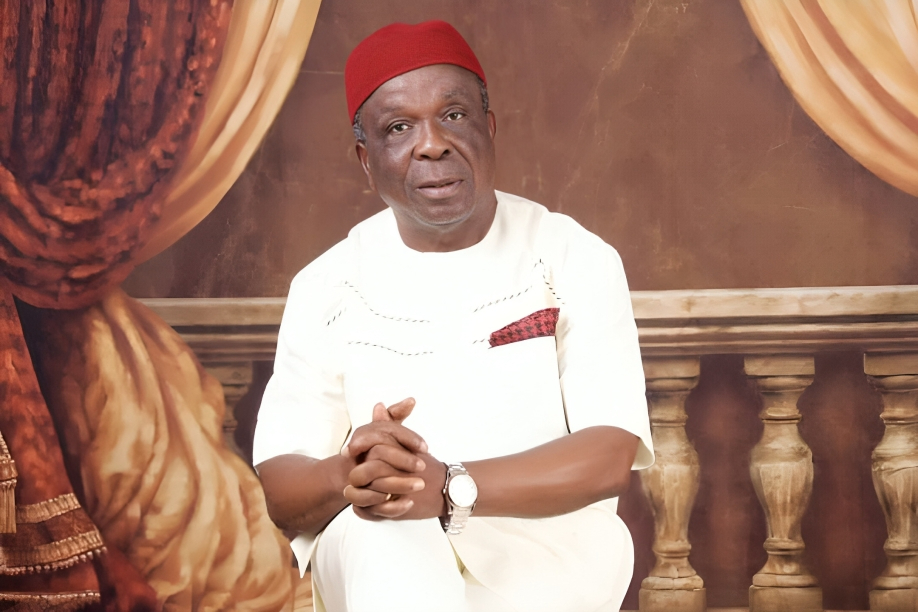
Prof Ukachukwu Awuzie is a former Vice Chancellor, Imo State University, and former National President of ASSU,Public Opinion Analyst,and Commentator on National and State Issues.