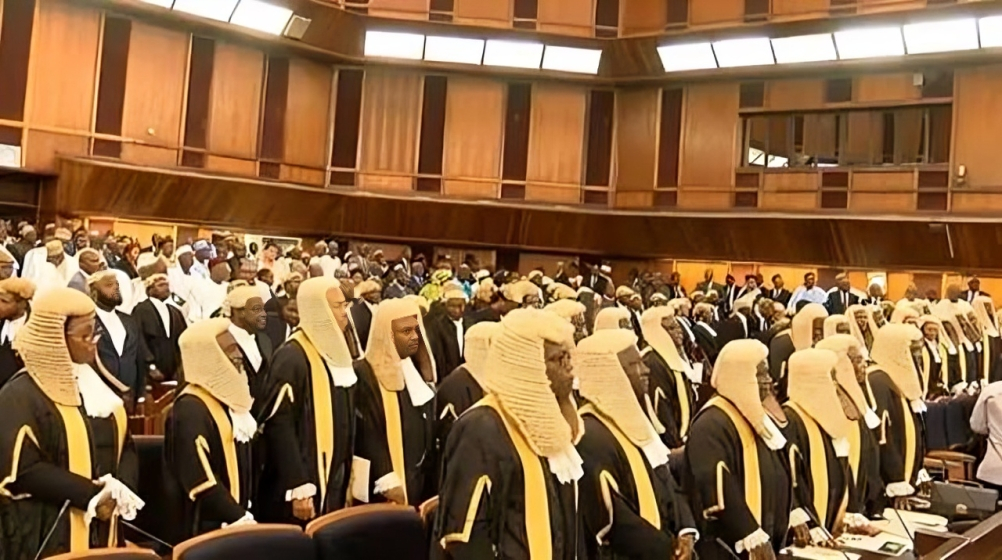
There are scandals that whisper. There are scandals that scream. And then there are scandals that announce themselves with gleaming duplexes, manicured lawns and carefully staged photographs. The decision by the Federal Government to build luxurious houses for judges belongs to the last category. It is not welfare. It is not reform. It is not justice. It is a dangerous political statement, a disturbing attempt to draw the judiciary dangerously close to the executive arm of government.


In what serious democracy does the executive build houses for judges and expect the public to believe that judicial independence remains intact? Where on earth has such a model become acceptable democratic practice? The judiciary exists precisely to check executive excesses, restrain governmental abuse and protect citizens against state power. Once the executive becomes landlord to judges, the moral distance between the bench and the government begins to disappear.
Nigerians are not fools. For years, citizens have watched with disbelief as strange judgments emerge from the courts. Election petitions have produced outcomes that many consider incomprehensible. Conflicting orders have become routine. Court shopping has become fashionable. The integrity of the judiciary has steadily suffered in the court of public opinion. At a time when confidence in the courts is already dangerously low, building houses for judges only deepens suspicion that the political class is attempting to capture the last institution that should remain independent.
The argument that judges deserve better welfare is absolutely correct. Judges deserve excellent salaries, improved allowances, quality healthcare, reliable security and dignified retirement benefits. Nobody disputes that. But welfare is not the same thing as executive gifts. Increase their pay. Improve their conditions of service. Strengthen judicial budgets. Give the judiciary financial autonomy. What government must never do is position itself as the benefactor of those expected to sit in judgment over it.
Many Nigerians have not forgotten the midnight raids on judges’ homes during the administration of former President Muhammadu Buhari. Large sums of foreign currencies were reportedly discovered in some residences. The images shocked the nation. Those incidents raised troubling questions about integrity within the judicial system. Whether fair or unfair, public confidence suffered enormously. Instead of rebuilding trust through institutional reforms, the Bola Tinubu administration now seeks to construct expensive houses that further fuel suspicion and deepen cynicism.
What makes this development even more offensive is the timing. Soldiers fighting terrorists and bandits often complain about inadequate equipment and poor welfare. Barracks across the country remain dilapidated. Teachers struggle under miserable conditions. Public schools collapse from neglect. Hospitals lack essential facilities. Journalists, who risk their lives exposing corruption and defending democracy, receive no such generosity. How many houses has the federal government built for teachers? How many estates exist for soldiers battling terrorists? How many residential schemes have been created for journalists?
Nigeria today is a country bleeding from multiple wounds. Hunger stalks millions of households. Inflation has devastated incomes. Kidnappers operate with frightening confidence. Entire communities live under the threat of bandits and terrorists. Young graduates roam the streets without jobs. Businesses are shutting down. In the middle of this national emergency, government officials proudly display luxury houses for judges as though they are unveiling a monument to justice. The opulence is not merely insensitive; it is obscene.
The defenders of this policy argue that judges require decent accommodation to perform their duties effectively. Nobody disagrees. But decent accommodation should emerge from transparent judicial welfare structures, not executive largesse. A judge who occupies a house built and handed over by politicians may remain legally independent, but public perception is another matter. Justice must not only be done; it must be seen to be done. The appearance of dependence is itself dangerous.
This entire project carries the unmistakable smell of institutional capture. It suggests a desperate attempt to pocket the judiciary, to create gratitude where independence should exist, and to establish relationships of obligation where constitutional separation ought to prevail. Democracies die not only through military coups. They also die quietly when institutions surrender their autonomy piece by piece until checks and balances become mere constitutional decorations.
Nigeria deserves a judiciary that fears nobody and owes nobody. Judges should be servants of the Constitution, not beneficiaries of executive benevolence. If government genuinely wishes to improve judicial welfare, it should increase salaries, strengthen pensions, guarantee security and provide institutional autonomy. Building expensive houses for judges while millions of Nigerians sink deeper into poverty sends the wrong message. It tells citizens that the comfort of the powerful matters more than the suffering of the people. What a country.