The popular adage goes thus that he who was not present at the interment of a corpse willy nilly starts exhumation from the feet – ‘Onye na amaghi ka esiri lie ozu na-esi na ukwwu avo ya’. Another adage that shares a similarity with this says that it is not only the wobbly neck of a deceased person that is subjected to proper arrangement – ‘O bughi nani onye nwuru anwu ka a na ahazi olu‘.

The choice of the topic of this piece is deliberate: it is my attempt to read the mind of the Governor of Imo State, H.E Senator Hope Uzodimma (Onwa); to deconstruct his perspective on the Imo Charter of Equity, his brainchild. In other words, I attempt to wear his very large shoes and thinking cap in order to properly arrange the seeming wobbly necks of Imolites irrespective of their divide on this topic. Now I do not have the privilege of having interacted with the Governor in this regard or being anywhere near his kitchen cabinet as to have obtained exclusive nuggets. In fact and on the contrary, I have been dutifully minding my business outside government while actively engaged in the discourse concerning governance in Imo State and the politics of succession especially as we are on the cusp of full-blown politicking.
Aside my understanding of what has been (and is being) said publicly about the Imo Charter of Equity, I at times chuckle at what the Governor is likely thinking beneath the speeches, fervent consultations, and political reactions. My submissions constitute an effort to interpret the reasoning, intentions, and political philosophy behind the Charter of Equity as proposed by the Governor, using logic, context, and the realities of Imo politics.
From this perspective, I make bold to say that the Imo Charter of Equity as envisioned by the His Excellency the Governor is neither an emotional response to pressure nor a concession to any particular zone. While it may have been situated in the political survival game of 2022, I believe the Governor views it ultimately as a deliberate, forward-looking, and precedent-setting initiative aimed at redefining how power is rotated among the three senatorial zones of Orlu, Owerri, and Okigwe. The Governor, it would seem to me, is less concerned with reopening old political arguments and more focused on setting down a clear path for the political future of Imo State.
The Governor wants to initiate and establish a precedent. As much as he wants to be successful in ‘choosing’ his successor, he intends the Imo Charter of Equity as his defining legacy.
A New Beginning, Not a Return to the Past
Reading the Governor’s mind, one gets the strong sense that he does not believe any binding Charter of Equity existed in Imo State before now. Yes, and on this score I opine that he is right. There have been complaints, expectations, gentleman agreements, and political sentiments expressed over the years. In this regard one can situate the ‘Egbu Declaration’ circa 1991, and the political arrangements and agreements that culminated in the birthing of H.E Chief Achike Udenwa as the Peoples Democratic Party (PDP) candidate for governorship of Imo State in 1999 despite the strong showing of late Barr. Humphrey Anumudu, et al. But none of these amounted to a clearly stated, publicly owned and acknowledged framework for rotating the governorship in Imo State which the Governor intends be consistently applied going forward. None also had the imprimatur of a statutory, nay advisory body.
The Governor’s Charter of Equity therefore appears to be a fresh political starting point. In my reading of his thinking, it is not designed to revive, restore, or complete any earlier arrangement because, in his view, no such arrangement ever formally existed. This is why I believe he consistently views the Charter as a new understanding meant to guide future political behaviour, not to correct the outcomes of past elections.
Put simply, the Governor seems to be saying: let us start something clear today, instead of arguing endlessly about what may or may not have happened yesterday.
Why Historical Arguments Miss the Point
From this attempt at reading the Governor’s mind, it becomes clear to me why he appears unmoved by arguments rooted in historical grievances. Claims and strident cries from proponents that the Charter should first accommodate Okigwe Zone (Imo North Senatorial District) in order to “complete their” remaining four-year tenure, or the ardent and impassioned pleas that Owerri Zone (Imo East Senatorial District) deserves automatic preference because it has not produced a Governor who served a full term, to me do not appear to impress him. Likewise, the at times hubris laden high pitch of those who posit that the Charter is not worth the paper upon which it was written.
The reason is straightforward. Such arguments assume that there was a pre-existing Charter that was breached and now needs repair. In the Governor’s thinking as I deduce, once that assumption collapses, the arguments built upon it also collapse. You cannot complete what never formally started, and you cannot repair what was never institutionally broken.
For the Governor, governance must move forward. If leadership is permanently tied to correcting yesterday’s outcomes, tomorrow will never arrive. His Charter of Equity was therefore designed to prevent future feelings of exclusion, not to arbitrate old political scores.
In Setting a Precedent, Every System Must Start Somewhere
One can reasonably infer that the Governor by his actions and disposition these past 6 years on the saddle of Imo State leadership and governance understands a basic truth about institutions: every system has a starting point. Precedents are not born perfect, and they do not begin by satisfying all past expectations. They begin by offering clarity and consistency going forward. My inference on the Governor’s acknowledgment of the imperfection of the said charter is drawn from my careful analyses of the Governor’s consistent pronouncements on this issue. On Monday October 23, 2023 when the Imo Council of Elders (a statutory advisory body set up by Imo State House of Assembly Bill No. 111 of 2022 and subsequently signed into law in or about January 2023) paid him a courtesy visit, the Governor said and I quote: ‘the document (Imo Charter of Equity) is bold, courageous and realistic though some may not completely believe in the document’. The Governor fully knew and acknowledged the imperfection inherent therein. However, his next words were unequivocal and final on the status of the Imo Charter of Equity handed over to him by the Imo Council of Elders: ‘you have passed the ball to me, I will go and score the goal’ (‘Uzodimma: I’ll deploy Government Machinery to defend Imo Charter of Equity’ Vanguard Newspaper, October 23, 2023)
An easy way to understand the Governor’s thinking on the Charter of Equity is through a simple grassroots analogy. When a community decides for the first time that market days will rotate among villages, arguments will naturally arise. One village may complain that it hosted the market less often in the past. Another may insist it is “owed” more days. But the wisdom of the elders often lies in drawing a line and saying: from today, this is how it will work. Over time, peace returns because everyone now knows what to expect. The Governor at various fora in recent times has also consistently maintained that he would adhere to the Charter.
This, in my analysis of the Governor’s mind, is exactly what the Charter of Equity seeks to do; to draw a clear line and establish a known order for the future.
Why the Proponent Must Be Allowed to Lead the Process
Another strong idea that appears to shape the Governor’s thinking in my opinion is the belief that the person who initiates a reform should be allowed to guide its early implementation. This is not about ego or self-interest; it is about coherence, political expediency and maybe, sincerity.
A story of the man who convinced his community to sink their first borehole was told. After agreeing in principle, the community handed the project to others who neither understood the terrain nor shared the original vision. The borehole failed repeatedly. When the initiator was eventually allowed to oversee the work, clean water finally flowed. The lesson was simple: vision without continuity often leads to failure.
Applied to the Charter of Equity, the Governor likely believes that allowing him to midwife the process gives the initiative credibility and direction. Attempts to immediately twist the Charter to serve old political claims, as seen in the cacophony of disparate voices, risk killing it before it matures.
Equity Is Not the Same as Entitlement
In my reading of the Governor’s mind, I also sense a clear distinction between equity and entitlement. The Charter of Equity, as he appears to conceive it, does not hand automatic political tickets to any zone. It simply assures every zone that it will not be permanently shut out of leadership.
This distinction is important for both grassroots citizens and elite stakeholders to understand. Equity means fairness of opportunity, not guaranteed outcomes. It means Orlu, Owerri, and Okigwe all belong to Imo State and all deserve a sense of belonging. It does not mean that history should be endlessly recalculated to decide who is “owed” the next turn.
The Governor’s approach seems to reject politics driven by grievance and replace it with politics driven by inclusion.
Stability, Simplicity, and the Burden of Leadership
Another thing that becomes clear in trying to read the Governor’s mind is his concern for stability. Imo politics has often been heated, uncertain, and deeply divisive. Succession battles have consumed energy that could have gone into development. A treatise could be written on the politics of leadership succession in Imo State!
A simple, well-understood rotation framework lowers tension. It makes politics less of a do-or-die affair. For the grassroots, it brings peace of mind. For investors and policymakers, it creates predictability. For the Governor, it likely represents a hard but necessary leadership choice – one that may not please everyone immediately but serves the long-term interest of the state.
Leadership, after all, is not about saying what everyone wants to hear, but about saying what needs to be said at the right time.
Guarding the Charter Against Political Opportunism
The Governor also appears aware that every good idea attracts opportunists. Some will seek to bend the Charter of Equity to justify personal ambitions or sectional advantage. This is why I believe he is rooted firmly on the idea that the Charter must not be anchored on past political calculations.
If the Charter becomes a tool for reopening old arguments, it will lose its power to unite. This is because of the fact that Owerri, Okigwe and even Orlu zones have very cogent and compelling arguments on why the implementation of the Charter ought to start from their zone, or ought not to apply at all! Afterall there is a surfeit of arguments that the Charter lacks a legal basis and thus is not legally binding. However, if the charter remains future-focused, as I believe the Governor intends, it can become a stabilising political culture.
A Charter for Tomorrow, Not Yesterday
Seen through the lenses of the Governor, the Imo Charter of Equity is a bold attempt to reset the political conversation. It is not an apology for the past, nor a reward system for historical grievances. It is a new beginning – simple enough for grassroots understanding and principled enough for elite acceptance.
By proposing a clear rotation of the governorship among Orlu, Owerri, and Okigwe, the Governor appears intent on building a legacy of inclusion and predictability. And by insisting that the Charter should start afresh, he underscores a timeless truth: every meaningful system must begin somewhere, and its initiator must be allowed to nurture it.
In this regard, and in consideration of the fact that His Excellency Dist. Sen. Hope Uzodimma midwifed the present Imo Charter of Equity in good faith, and the Charter which was produced in consultation with the Imo Elders Council and a cross section of Imolites of repute, provides that upon the expiration of the Governor’s current tenure that someone of Owerri Zone extraction would succeed him, that agreement which is in writing should be respected and applied. Like I earlier submitted, every meaningful system must begin somewhere, and the Governor as the initiator must be allowed to nurture it.
The adoption of the Imo Charter of Equity by the Imo Elders Council, a statutory body and an assembly of highly respected men and women of wisdom and repute in Imo State, together with the report of its extensive deliberations, powerfully affirms the Charter’s noble purpose, intrinsic value, and altruistic intent
As recorded and reported in the press at the time, the motion for the adoption of the Imo Charter of Equity was moved by no less a personality, than Prof. Maurice Iwu from Imo North Senatorial District. The Chairman of the Council HRH Eze Dr. Cletus Ilomuanya is from Orlu Zone. The resolution of the Council that H.E Dist. Sen. Hope Uzodimma from Orlu Zone should continue for a second term as Governor and thereafter that each zone starting with Owerri Zone, and thereafter Okigwe and Orlu would hold the Governorship position for two tenures of four years each in line with the Charter of Equity contributed in no small way to the Charter recorded in the landslide victory recorded by the Governor in the 2022 November elections.
The duty for Owerri zone like the Governor had hinted to several groups and stakeholders from the zone who have variously consulted with him and paid solidarity visits, is for the zone to come together and present a common united front as well as a concentric circle of conspiracies, disparate and different interests would have to be stepped down in the collective interest of the whole and to enable the Governor achieve his clearly stated objective. The Governor in his mind, I believe would not like to be second guessed; he has already played his hand and it is for Owerri Zone to do the needful. Continued consultation within and outside the zone, and building very reasonable and robust elite consensus across the entire state through purposeful leadership, are processes and outcomes the Governor would be looking at. Consulting and presenting the Governor with credible options of a few accomplished and acceptable persons from the zone for consideration and collegiate approval, rather than fait accompli in the form of just one person would be advisable.
In the end, the Charter of Equity, as I read through the Governor’s mind, is less about who gets power next and more about how Imo State chooses to live together politically in the years ahead.
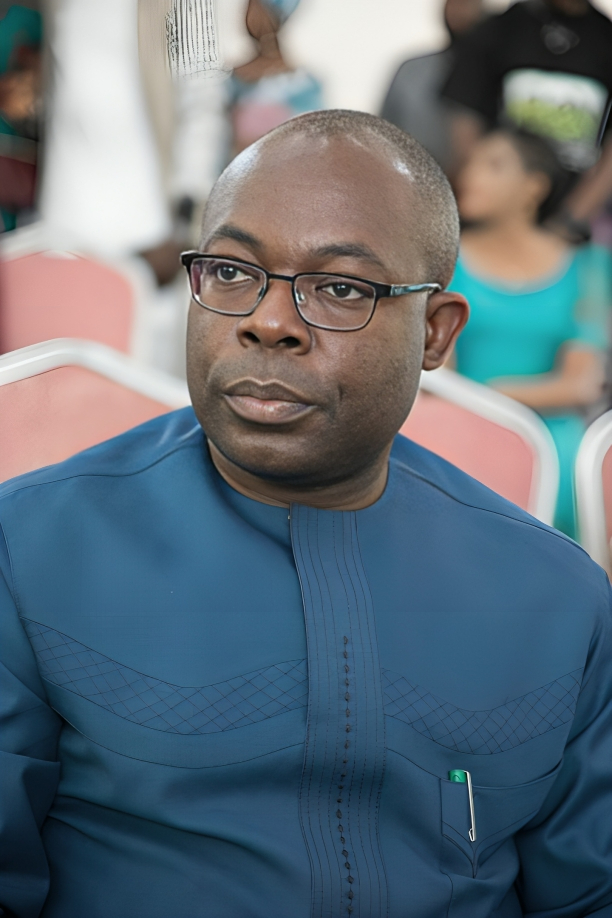
Obinna Mbata is a lawyer, former Hon. Commissioner for Finance, Imo State and the APC House of Rep. Candidate for Owerri Federal Constituency in 2019.
In the end, the Charter of Equity, as I read through the Governor’s mind, is less about who gets power next and more about how Imo State chooses to live together politically in the years ahead.
Obinna Mbata is a lawyer, former Hon. Commissioner for Finance, Imo State and the APC House of Rep. Candidate for Owerri Federal Constituency in 2019.