The contest for Owerri senatorial seat has again opened a familiar but important conversation—one that goes beyond party politics and personalities to the deeper question of the kind of men and women the zone sends to the National Assembly. It is a conversation rooted in history, shaped by performance, and guided by a long-standing culture of quality representation.
Owerri zone has, over the years, built a reputation for producing senators who not only represented their people but also distinguished themselves at the national level. These were individuals who combined intellect, political skill, and institutional understanding to make meaningful contributions in the Senate while projecting the zone positively.
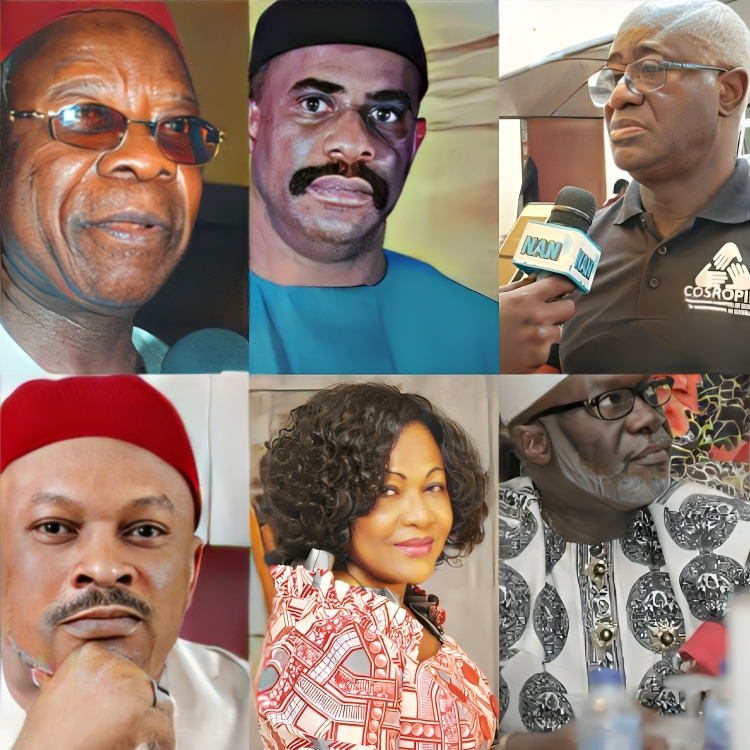
One of the defining features of this legacy is that many of Owerri’s senators did not merely occupy seats; they held positions of influence. Senator Samuel Anyanwu, for instance, served as Chairman of the Senate Committee on Ethics and Privileges, a powerful role that placed him at the center of legislative discipline and institutional integrity.
Similarly, Senator Chris Anyanwu carved out a strong presence in the Senate, serving as Chairman of the Senate Committee on Navy. Her role was not only significant within the legislative framework but also carried strategic national importance, with implications that extended to the South East, including Owerri zone.
These positions were not ceremonial. They translated into visibility, access, and, in many cases, tangible benefits for the zone. They also enhanced the stature of Owerri representatives, reinforcing the perception of the zone as a breeding ground for capable and effective lawmakers.
Evan Enwerem, widely known as “Mature,” remains one of the most prominent figures in this history. His emergence in 1999 as Nigeria’s first Senate President of the Fourth Republic was not just a personal achievement but a defining moment for Owerri zone. It signaled the capacity of the zone to produce leaders of national consequence.
The late Senator Amah Iwuagwu also stands tall in this tradition. A native of Ikeduru, he is still widely regarded as one of the finest senators the zone has produced. His legislative depth, composure, and effectiveness left a lasting impression that continues to shape expectations of representation from the area.
Senator Eze Ajoku, who completed Iwuagwu’s tenure, brought stability and purpose to a delicate transition. His quiet but focused approach demonstrated that legislative impact is not always loud but can be measured in consistency and substance.
This history sets a high bar for anyone seeking to represent Owerri zone. It is not a platform for experimentation or mediocrity. It demands individuals with proven capacity, clear vision, and the ability to navigate the complexities of national lawmaking while remaining grounded in local realities.
In this context, Senator Ezenwa Onyewuchi’s tenure attracts mixed assessments. While some observers acknowledge aspects of his performance, a larger number remain unconvinced about the overall impact. Such divided opinion reflects a broader sentiment that the zone can, and should, aspire to a higher standard.
Ultimately, the issue before Owerri voters is not about continuity for its own sake but about quality. The zone’s history is populated by men and women of exceptional ability who not only made Owerri proud but also advanced their own political careers through credible performance. That tradition must not be diluted.
As the next electoral cycle approaches, the imperative is clear that Owerri zone needs its best. The weight of its history demands nothing less than someone who can match, and possibly surpass, the record set by those who came before.