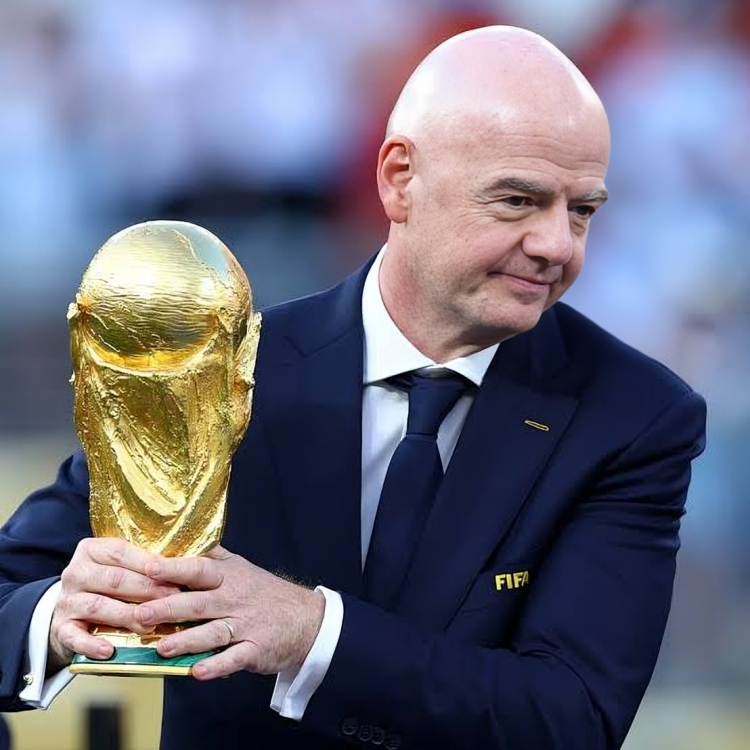
There is something profoundly troubling about FIFA’s proposal to open the commercial architecture of the World Cup to private investors.
The organisation may dress the plan in the respectable language of investment, growth and football development, but beneath the financial jargon lies a question that should trouble every football lover: who, ultimately, will own the economic future of the world’s game?
The World Cup is not a struggling company searching for venture capital. It is the most valuable sporting spectacle on earth, sustained by the loyalty of nations, the labour of players and the passion of billions of supporters.
FIFA should not be allowed to turn that collective inheritance into an investment opportunity for private capital. The World Cup belongs to football—not to financiers looking for another lucrative asset.
FIFA’s principal justification—that private investment will unlock more money for football development—rings hollow when measured against the record of the existing system.
For years, FIFA has channelled substantial development funds to its 211 member associations, including millions of dollars into Africa. Yet across much of the continent, the promised football revolution remains painfully elusive.
Stadiums are crumbling, grassroots football is starved of proper facilities, youth development structures are weak and domestic leagues struggle to attract the investment and professionalism they deserve.Where, then, has the money gone?
The uncomfortable reality is that in some football administrations, funds intended for development have been undermined by alleged corruption, waste and financial mismanagement. The answer to this failure cannot be to introduce even more money into the same opaque structures.
If existing funds cannot be accounted for, why should anyone believe that billions more will suddenly be managed with integrity?
Nigeria is a devastating case study. The country has produced some of Africa’s greatest footballers and possesses a football culture capable of rivaling almost any nation on the continent. Yet its football infrastructure remains a national embarrassment.
Stadiums that should be temples of the beautiful game have been allowed to deteriorate. Domestic competitions continue to battle administrative and financial dysfunction, while national teams have repeatedly been dragged into controversies over funding, logistics and management.
This is not the portrait of a football nation starved solely of money. It is the portrait of a system starved of accountability. Nigerians have every right to ask what happened to the resources that have entered the football system over the years and why the country still struggles to build and maintain the basic infrastructure required to develop its abundant talent.
FIFA should fix this broken chain of accountability before proposing another financial pipeline.The most disturbing aspect of the proposed arrangement is the potential for conflicts of interest.
There is no established evidence that FIFA’s senior officials are secretly preparing to become investors or to use fronts to channel money into private pockets. But FIFA should not pretend that such concerns are irrational. Whenever billions of dollars are placed within a new investment structure, questions about beneficial ownership, hidden interests and insider influence are inevitable.
Any proposal that allows private investors to acquire a stake in the commercial machinery of the World Cup must therefore be subjected to the highest possible level of scrutiny.
FIFA should publicly disclose every investor, every beneficial owner and every financial term of the arrangement. No official connected to FIFA or any member association should be permitted to profit secretly, directly or indirectly, from such investments.
Without these safeguards, the proposal risks creating a new financial labyrinth in which football’s enormous wealth can be diverted into private hands while the ordinary supporter is left with nothing but suspicion.
FIFA should stop trying to solve football’s problems by throwing more money at them and start confronting the corruption and governance failures that already exist.
The organisation should establish an independent international football audit authority with powers to investigate how development funds are spent, publish annual forensic audits and impose immediate sanctions where financial misconduct is established.
In Africa, FIFA funding should increasingly be tied to independently verified projects and measurable results: functioning academies, renovated stadiums, modern training grounds, viable domestic leagues and properly funded grassroots programmes.
The World Cup should remain a global sporting treasure, not become a financial asset progressively carved up among private investors. FIFA does not need to sell part of football’s soul to make the game richer. It needs to make football’s existing wealth work for football.
Until FIFA can prove that the money already entrusted to its football administrators is reaching the pitches, players and communities for whom it was intended, it has no convincing moral argument for placing the World Cup’s commercial future in private hands.