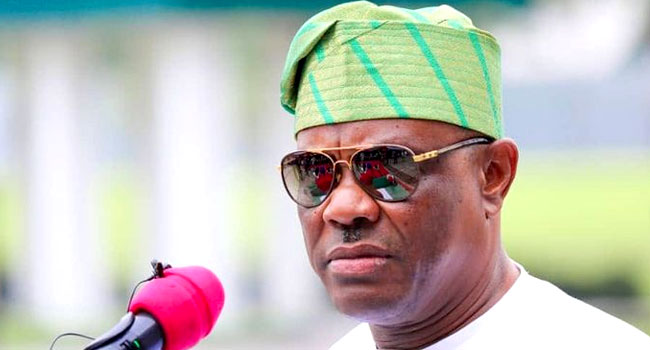
There are moments in a democracy when a single statement strips power of its pretence and exposes its instinct. This is one of them. When the Minister of the Federal Capital Territory, Nyesom Wike, publicly invokes the language of violence against a journalist, the issue ceases to be about tone or temperament—it becomes a question of democratic survival.


Wike must apologise. Not as a matter of courtesy, but as a constitutional obligation to the values he swore to uphold. Anything short of a swift, unqualified retraction is an admission that he considers the press expendable in the exercise of power.
Let us be clear about what happened. Channels Tv journalist, Seun Okinbaloye did not incite violence, fabricate facts, or breach professional ethics. He did what journalism exists to do: interrogate power, analyse political direction, and raise uncomfortable questions about Nigeria’s democratic drift. That is not provocation. That is duty. And in any functioning republic, it is protected—not punished.
What Wike offered in response was not disagreement. It was menace. And when menace comes from a man who controls state machinery, it is never idle. Words, in such contexts, are instruments. They travel beyond microphones into the bloodstream of political culture, where they legitimise excess and normalise intimidation. A threat uttered at the top does not remain rhetorical at the bottom.
This is precisely how democratic erosion begins—not always through decrees or constitutional amendments, but through the gradual devaluation of dissent. A joke about shooting a journalist is not humour; it is a signal. It tells every overzealous loyalist that hostility toward the press is acceptable. It tells every threatened reporter that their safety is negotiable. And it tells the public that power no longer feels obliged to tolerate scrutiny.
Wike’s defenders will, as always, reach for the familiar crutches—context, exaggeration, personality. But public office is not a theatre for unchecked impulses. It is a discipline. The higher the office, the narrower the margin for recklessness. A minister who cannot distinguish between criticism and hostility has already crossed a dangerous line—from governance into grievance.
More troubling is that this is not an aberration. It is consistent with a pattern. Wike’s political persona has long thrived on confrontation, often blurring the line between assertiveness and intimidation. What we are witnessing is not a slip—it is a culmination. The mask is no longer slipping; it is off.
And what triggered this? Not an attack. Not a scandal. Not even a falsehood. Merely an opinion about Nigeria’s political trajectory. If that is sufficient to provoke violent imagery, then the fault line is obvious. The issue is not media irresponsibility; it is elite intolerance. Wike is not reacting to distortion—he is reacting to scrutiny.
This is how authoritarian reflexes announce themselves—casually, almost instinctively. They do not begin with censorship laws; they begin with the delegitimisation of critics. They do not start with prison cells; they start with words that make repression thinkable.
Nigeria’s media ecosystem is already operating under strain—financial vulnerability, regulatory pressure, and the ever-present shadow of political interference. In such an environment, statements like Wike’s are not isolated missteps; they are accelerants. They deepen fear, shrink civic space, and embolden actors who see journalists not as watchdogs, but as obstacles to be removed.
An apology, therefore, is not a favour to the press. It is the bare minimum required to reaffirm a commitment to democratic norms. It must be unequivocal. No hedging. No arrogance disguised as clarification. No retreat into the lazy refuge of “misinterpretation.”
If Wike cannot bring himself to do that, then Nigerians should accept the implication without illusion: that a senior government official is comfortable framing journalists as legitimate targets—if not in action, then in attitude.
And once that line is crossed, silence is no longer neutrality. It is complicity.