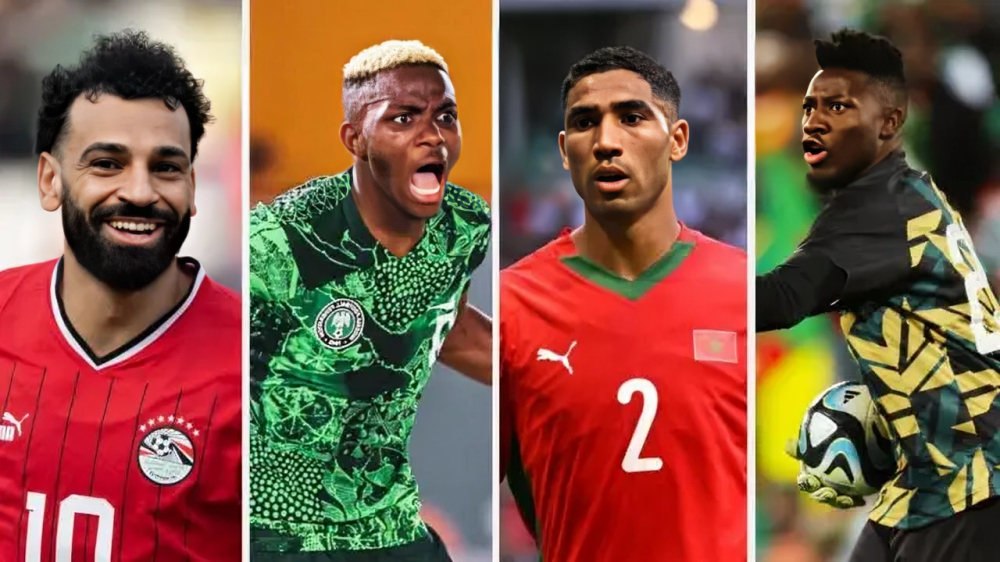
Africa has emerged as the biggest winner of the 2026 FIFA World Cup group stage, with the Confederation of African Football (CAF) recording the highest qualification rate among all football confederations and delivering a powerful response to critics who questioned the continent’s expanded representation.
Nine of Africa’s ten representatives advanced to the Round of 32, giving CAF an impressive qualification rate of 90 percent. The figure places Africa ahead of South America’s 83.3 percent and Europe’s 81.2 percent, while North America managed 50 percent and Asia recorded only 22.2 percent. Oceania failed to produce a single team in the knockout rounds.
The numbers have altered one of football’s oldest assumptions — that Europe remains the unquestioned centre of the global game. Instead, African teams have demonstrated tactical discipline, physical strength and growing technical sophistication, suggesting that the continent’s football development is beginning to yield tangible results on the biggest stage.
The performance of African nations also casts fresh doubt on criticism from former Italy coach Gennaro Gattuso, who had argued that Africa was allocated too many places at the expanded World Cup. Italy subsequently failed to qualify for the tournament, while African teams have become one of the dominant stories of the competition.
For years, African football was viewed as a source of individual talent but lacking collective organisation. This World Cup has challenged that stereotype. Better coaching, improved youth development, stronger domestic structures and greater exposure of African players in Europe’s leading leagues have helped narrow the gap between Africa and traditional football powers.
Yet the real test still lies ahead. While Africa has excelled in the group stage, attention is now turning to the Round of 32 and the Round of 16. The continent’s success will ultimately be measured by how many of its representatives survive the knockout rounds and mount serious challenges for the latter stages of the tournament.
The success of CAF also highlights an uncomfortable reality for Nigeria. While African football is enjoying one of its finest moments, the Super Eagles are watching from home after failing to qualify for a second consecutive World Cup.
For a country that once regarded itself as one of Africa’s football heavyweights, Nigeria’s absence has become increasingly difficult to explain. Smaller African nations have modernised their football administration, improved talent development and built competitive national teams, while Nigeria continues to struggle with administrative instability and inconsistent planning.
The emergence of countries once considered outsiders serves as a warning to Nigerian football authorities. Africa is moving forward, but Nigeria risks being left behind. The continent’s growing influence on the world stage is taking place without one of its traditional giants.
As the knockout rounds begin, Africa has already won one important battle — proving that its increased World Cup allocation was justified. The remaining challenge is to convert group-stage success into deep runs in the tournament and perhaps, for the first time, mount a genuine challenge for football’s biggest prize.