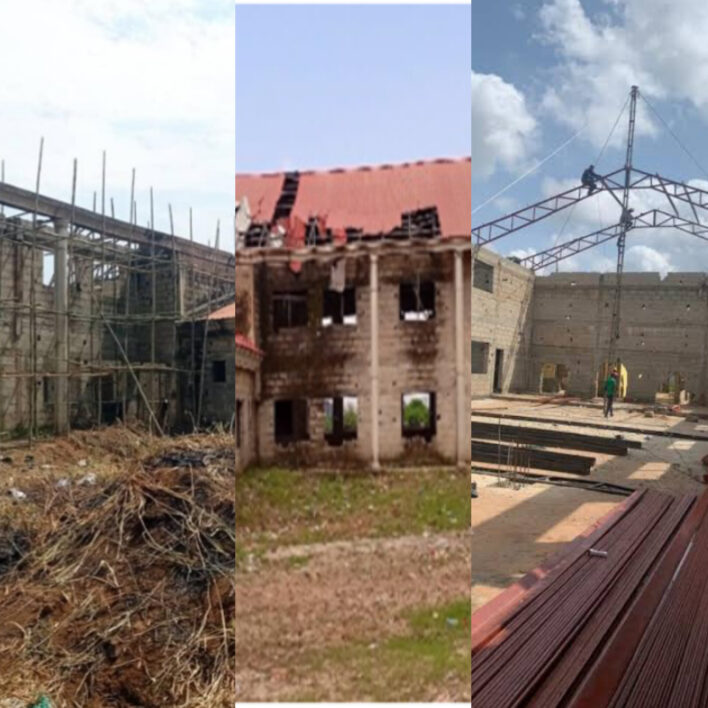
History is often defeated, not by conquest, but by neglect. Civilizations do not always collapse under the weight of war; sometimes they simply decay in silence, abandoned by those who inherited their glory. That is the haunting spectacle at Ugwu Ekwema Civic Centre, the ancient hill where the story of Owerri is believed to have begun. Today, the birthplace of a people’s identity wears the sorrowful garment of abandonment, its walls gashed by time, its surroundings overwhelmed by decay, and its once-proud heritage left pleading for remembrance.

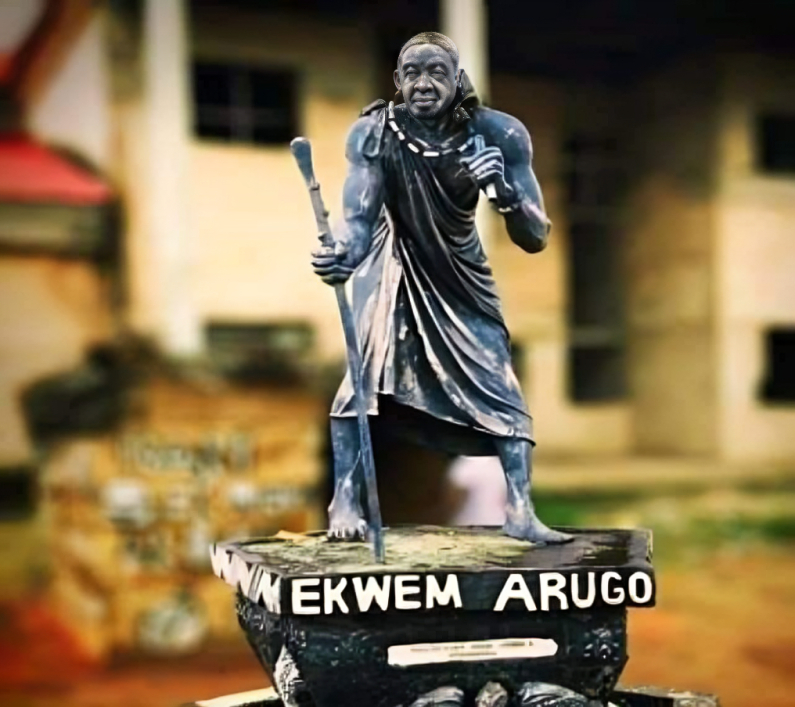
Owerri oral tradition places Ugwu Ekwema at the very heart of the origin of Owere Nchi Ise. The hill derives its name from Ekwema Arugo, also known in some traditions as Ekwem Oha, the patriarch whose journey became the foundation of present-day Owerri. Traditional accounts hold that Ekwema fled Uratta after a bitter family dispute. Seeking refuge, he settled upon the hill that later became known as Ugwu Ekwema. From that solitary settlement sprang the communities that evolved into the original five villages of Owerri—Umuoronjo, Amawom, Umuodu, Umuonyeche and Umuoyima. Though preserved chiefly through oral history handed down across generations, the narrative remains one of the strongest pillars of Owerri’s cultural memory.
Every civilization preserves sacred spaces. The Jews have Jerusalem. The Greeks cherish the Acropolis. The Yoruba hold Ile-Ife in reverence. For the people of Owerri, Ugwu Ekwema occupies that symbolic place where ancestry, memory and identity converge. It is more than brick and mortar. It is an archive without paper, a museum without glass showcases, a monument whose greatest treasures are the stories embedded in its soil.
Sadly, a visit to the civic centre today presents a disturbing contradiction. What ought to inspire reverence instead evokes pity. The buildings have deteriorated badly. Cracked walls, broken structures, neglected surroundings and failing facilities now define a place that should ordinarily welcome visitors, scholars, cultural enthusiasts and descendants eager to reconnect with their roots. The atmosphere is one of painful abandonment, as though history itself has been left to weather the elements without guardians.
The decline did not happen overnight. Since the administration of former Governor Ikedi Ohakim, which made visible efforts towards preserving aspects of the centre, successive governments have shown little sustained commitment to restoring the historic site to its deserved status. The consequence is that one of Imo State’s most treasured cultural assets has gradually slipped into decay, receiving attention only through occasional lamentations rather than deliberate policy.
Yet hope, like history, refuses to disappear completely. The Onye Isi Ala Owerri and Owerri Spiritual Leader, Reginald Nwakom Ejiogu, has emerged as the strongest voice insisting that Ugwu Ekwema must not perish. Through the Ekwema Cultural Heritage Foundation, he has championed a determined campaign to restore the historic civic centre, not merely as a physical structure but as a cultural sanctuary where Owerri’s history, traditions and identity can once again flourish. His intervention has rekindled conversations about heritage preservation that had almost faded into resignation.
Encouragingly, the response has begun to gather momentum. Meaningful donations and financial contributions are flowing from public-spirited individuals, community leaders and well-wishers determined to rescue the centre from further deterioration. The restoration initiative also envisions a modest historical museum, skills acquisition facilities and a revitalised civic environment capable of promoting cultural tourism and educating future generations on the origins of Owere Nchi Ise. It is an awakening driven not merely by emotion but by an understanding that a people who abandon their history ultimately weaken their future. Every contribution represents not simply a gift of money but a vote of confidence in Owerri’s enduring identity.
Still, philanthropy alone cannot shoulder the burden of cultural preservation. Government must reclaim its constitutional and moral responsibility. Ugwu Ekwema deserves restoration not as a favour to a community but as an investment in tourism, education, historical scholarship and cultural continuity. Properly rebuilt, the civic centre could become a destination for researchers, cultural festivals, heritage tourism and the education of younger generations about the origins of Owere Nchi Ise. The ongoing community effort deserves official backing, for history survives best when public institutions and the people become partners in preserving it.
Ugwu Ekwema is not asking for luxury. It is asking for memory. It is asking that Owerri should remember where its footsteps first touched the earth. A people who cannot protect the hill from which their story began risk becoming strangers to their own history. The rehabilitation of Ugwu Ekwema Civic Centre is therefore not merely a construction project; it is the restoration of identity, the renewal of heritage and the reaffirmation that the story of Owerri remains worthy of preservation for generations yet unborn.