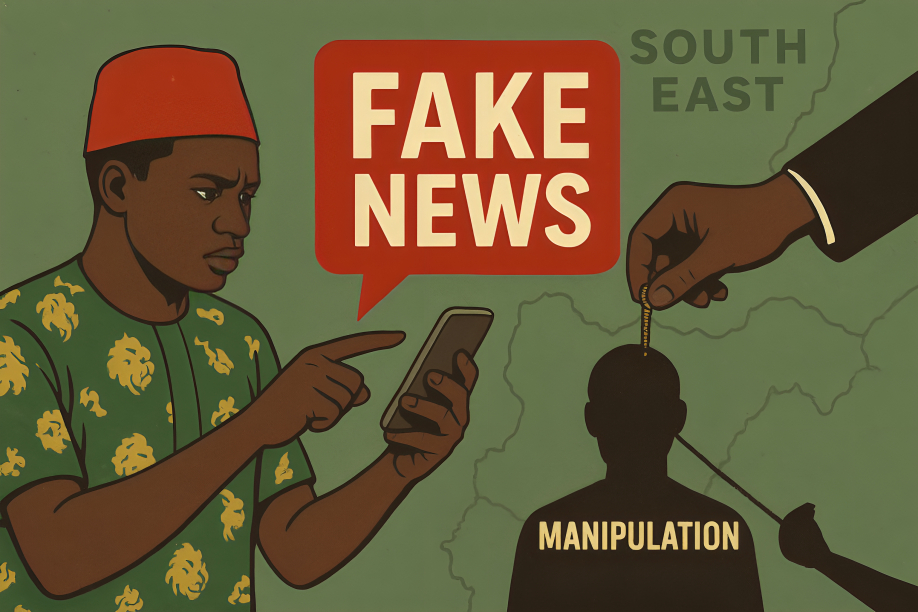
As Nigeria’s political landscape grows increasingly polarized, fake news has become a powerful tool — manipulating perceptions, deepening divisions, and eroding public trust in democratic institutions. In the South East, misinformation fueled by political operatives and online influencers has transformed into a thriving industry. This investigative report exposes how this menace continues to flourish amid widespread unemployment, weak regulatory oversight, and rising political desperation
———————————————————————————————————————————–
Chinedu, a self-styled online influencer based in Owerri, Imo State, does not work for any newsroom. He has no journalism background, but his smartphone and a strong internet connection have become his ticket into Nigeria’s booming misinformation industry.
Ahead of the 2023 general elections, Chinedu was hired by an aspirant for a House of Representatives seat to manage his “digital perception.” His monthly pay of ₦100,000, plus data allowance, came with a simple instruction: discredit the opponent, trend the boss. Facts were optional.
“We didn’t verify anything,” he told PTJI. “Once a story made the other candidate look bad, we pushed it. Everyone was doing it.” he said.

For hundreds of unemployed youths across the South East, fake news has become both a source of livelihood and a political weapon. They operate as “social media soldiers,” paid by campaign teams to influence public opinion through coordinated disinformation. These online operators flood Facebook, X (formerly Twitter), and WhatsApp with falsehoods — from claims of rigging to doctored videos — creating confusion, anger, and violence.
On election days, misinformation spreads faster than verified updates from the Independent National Electoral Commission (INEC). Before official announcements are made, social media users are already inflamed by manipulated videos and fake tallies. By the time the truth emerges, the damage is done — trust is broken, tempers rise, and violence brews.
Mr. Collins Opuruozor, Special Adviser on Electronic Media to the Imo State Governor, described fake news as a plague.
He said: “Fake news is a silent plague that corrodes the soul of society, distorting truth and weaponizing ignorance. It spreads like wildfire through the veins of social media, sowing distrust among citizens, wrecking reputations, and undermining the very foundations of democracy. In its wake, facts lose their sanctity, reason becomes hostage to emotion, and the line between reality and illusion blurs dangerously. The tragedy of fake news lies not just in its falsehoods, but in its ability to make people doubt even the truth when it finally appears.”
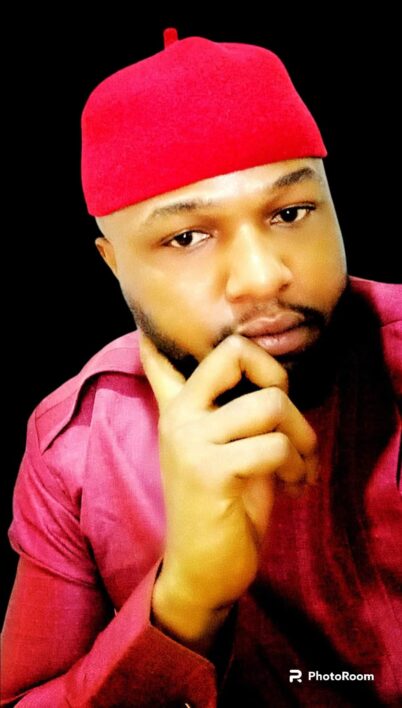
Dr. Ikenna Onuoha, Head of Journalism and Media Studies at Imo State University, Owerri, in his submission, said the danger lies in how misinformation exploits existing divisions.
“Fake news thrives in a society that’s already polarized,” he explained. “Once citizens lose faith in government institutions, they start believing only what aligns with their emotions. Democracy begins to collapse when falsehood replaces evidence.”
Across some South East states, fake news has been used to inflame ethnic and political rivalries.
A report by Global Rights, advocates for sustainable justice, noted that since the establishment of The Incident for Election Atrocities (ICEA), it has provided a coordinated platform for evidence collection, preservation, and advocacy on election-related atrocities.
According to the group, the ICEA documented verified incidents of hate speech, malicious propaganda, fake news, violence, and other election-linked offences. Its tracking in the three months leading up to the 2023 elections warned that insecurity and atrocious speech disrupted the smooth conduct of the polls. The Centre also recorded the weaponization of hate speeches and the propagation of fake news both in physical and virtual forums.
It was observed that most architects of these campaigns are often found within political structures. Many political parties now include “digital strategy units” with budget lines for “perception management” — a euphemism for sponsored disinformation.
A former media aide to a House of Assembly aspirant in Umuahia, Abia State, who spoke on condition of anonymity, confirmed this trend.
“We were told to post stories that make our boss look strong and the opponent weak,” he said. “It’s not journalism, it’s propaganda — and it pays.”
The consequences are far-reaching. Voters confused by conflicting narratives lose faith in the political process. During the 2023 elections, rumours of rigging sparked street protests in parts of Owerri and Aba even before official results were announced.
Fake news has also become a trigger for insecurity. In early 2023, a viral voice note claimed that unknown gunmen had taken over major roads in Orlu and Okigwe. Within hours, panic spread. Schools shut down, markets emptied, and transport halted. Police later confirmed there was no such attack. The false alert had originated from a partisan WhatsApp group.
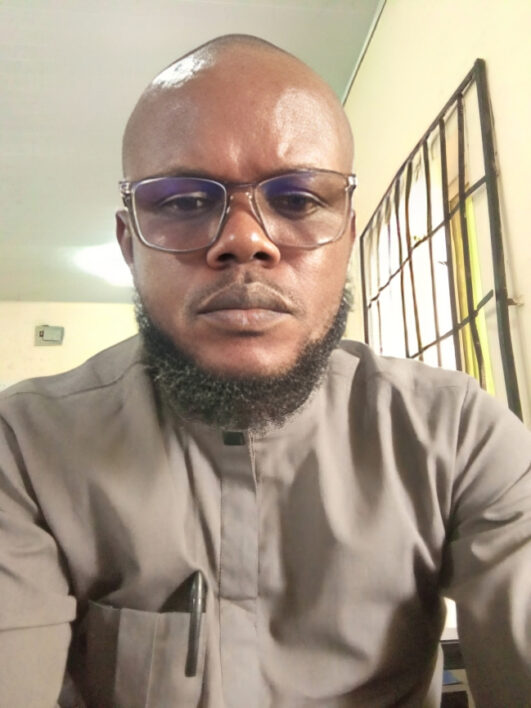
Professor Protus Nathan Uzoma, a university don and social critic, told PTJI that fake news has grown into a structural threat to peace in the South East.
He said: “Fake news now functions like psychological warfare against society. False reports about political conspiracies or communal attacks spread rapidly in places with weak institutional trust. Misinformation has become both a weapon and a trigger. Once it provokes emotional reaction, it’s nearly impossible to control.”
According to Uzoma, curbing the menace requires education and collaboration. “We must invest in media literacy, promote fact-checking, and hold political actors accountable,” he added. “Citizens must learn to question before sharing. You cannot fight lies with silence.”
At this point, media strategist and analyst, Nnamdi Cos-Ukwuoma offers a deeper perspective on why fake news continues to destabilize the South East, especially Imo State. He describes the problem not merely as a communication failure but as a political culture built on manipulation.
Ukwuoma argues that fake news has become the oxygen of political contestation in the region. “In today’s South East politics,” he said, “disinformation is no longer an accident — it’s a deliberate strategy. Political actors design false narratives to dominate perception, silence opponents, and redirect public anger. It’s a form of power.”
He explained that the South East’s emotionally charged political environment — defined by grievances over marginalization, zoning, and leadership rotation — creates a fertile ground for misinformation.

“When people already feel wronged or excluded,” he said, “a rumour can easily confirm their fears. Once that happens, logic disappears, and emotion takes over.”
Ukwuoma further noted that in Imo State, the absence of transparent government communication amplifies the spread of falsehoods.
“When officials fail to speak clearly and promptly, fake news fills the gap,” he said. “The public interprets silence as confirmation. That vacuum of trust is the breeding ground of disinformation.”
He added that fake news has destroyed reputations, inflamed communities, and even undermined peacebuilding efforts.
“A single false claim can erase years of inter-communal understanding,” he warned. “It can make neighbours see each other as enemies overnight.”
According to him, addressing the crisis demands rebuilding both institutional and moral integrity within the media space.
“We need a cultural re-education of the communication ecosystem,” he emphasized. “Bloggers, influencers, and citizen journalists must be retrained to value truth as a public good, not a transaction.”
He stressed that the fight against disinformation should not rely solely on punitive laws but must include proactive civic enlightenment.
“If citizens can recognize manipulation before it spreads, the incentive for fake news will collapse,” he said.
However, government efforts remain disjointed. Occasional warnings from the Nigeria Police Force (NPF) or the National Information Technology Development Agency (NITDA) rarely evolve into sustained strategy. Many agencies lack the capacity or coordination to track and counter misinformation in real time.
In February 2024, Nigeria’s Inspector General of Police, Kayode Egbetokun, ordered the NPF National Cybercrime Centre (NPF-NCCC) to clamp down on individuals and groups spreading fake news and engaging in cyberbullying. The Force warned that such actions, criminalized under the Cybercrimes (Prohibition, Prevention, etc.) Act 2015, threaten national stability and public safety.
According to the Act, anyone who knowingly publishes or transmits false information that could incite panic, disrupt peace, or damage reputation may face prosecution. The Nigerian Criminal Code further penalizes the publication of false statements likely to cause fear or alarm to the public.
To strengthen regulation, the National Information Technology Development Agency (NITDA) in 2022 introduced a Code of Practice for Interactive Computer Platforms, compelling social media companies and blogs to moderate disinformation, maintain user data logs, and respond promptly to flagged fake content.
In October 2025, the Nigerian Senate advanced the controversial Protection from Internet Falsehoods and Manipulation Bill, often called the “Social Media Bill.” Sponsored by Senator Mohammed Sani Musa, the bill seeks to establish a framework for monitoring and regulating online information. While supporters argue it’s necessary to curb online falsehoods, critics fear it could be used to suppress free speech.
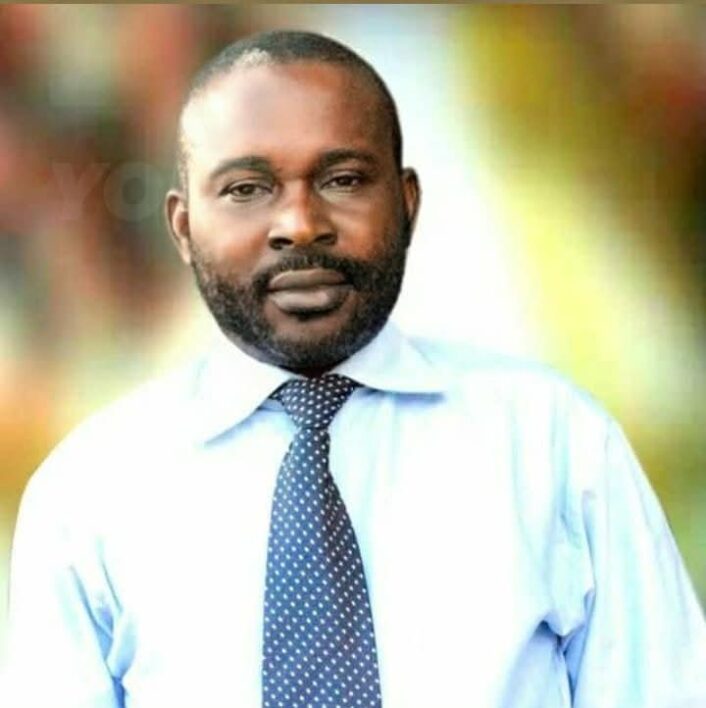
Senator Musa defended the bill, saying: “This is not an attempt to stifle free expression but to protect society from disinformation capable of destroying peace.”
Lawmakers including Abba Moro and Elisha Abbo supported the bill, citing the dangers of fake news to democracy. However, some senators warned it must not be used to target dissenting voices.
The bill has now been referred to the Senate Committee on Judiciary, Human Rights and Legal Matters for review — a move that indicates the government’s growing interest in combating disinformation through legislation.
Experts, however, caution that the solution cannot be purely legal.
“You can’t legislate truth into existence,” said Dr. Onuoha. “Without trust, education, and ethics, laws alone will not stop fake news.”
Amid weak enforcement, misinformation has become a profitable industry. For jobless youth like Chinedu, politics online is business.
“If I don’t post these things, someone else will,” he shrugged. “The truth doesn’t trend — lies do.”
The implications are profound. A single post can inflame ethnic suspicion, damage reputations, or destabilize entire communities. From doctored videos to fabricated election alerts, fake news has become a weapon of mass manipulation.
As Nigeria moves toward future elections, the South East stands at a critical junction — where information can either heal division or deepen wounds. The region’s future peace and democracy depend on whether truth can outpace the speed of lies.
As misinformation continues to undermine peace and democracy in the South East, there is an urgent need for collaboration between government, civil society, and the media to counter its spread. Strengthening digital literacy, investing in community-based fact-checking hubs, and supporting initiatives like the Project Truth Journalism Initiative will help restore confidence in public discourse. With sustained effort and support from local and international partners, the region can move from manipulation and mistrust toward truth, unity, and responsible communication.
Editor’s Note:
This investigation was produced by the Project Truth Journalism Initiative (PTJI), a non-profit investigative arm of INNONEWS Media Network Limited, publishers of innonews.com.ng, under its program on media accountability, misinformation, and peacebuilding in Nigeria’s South East.