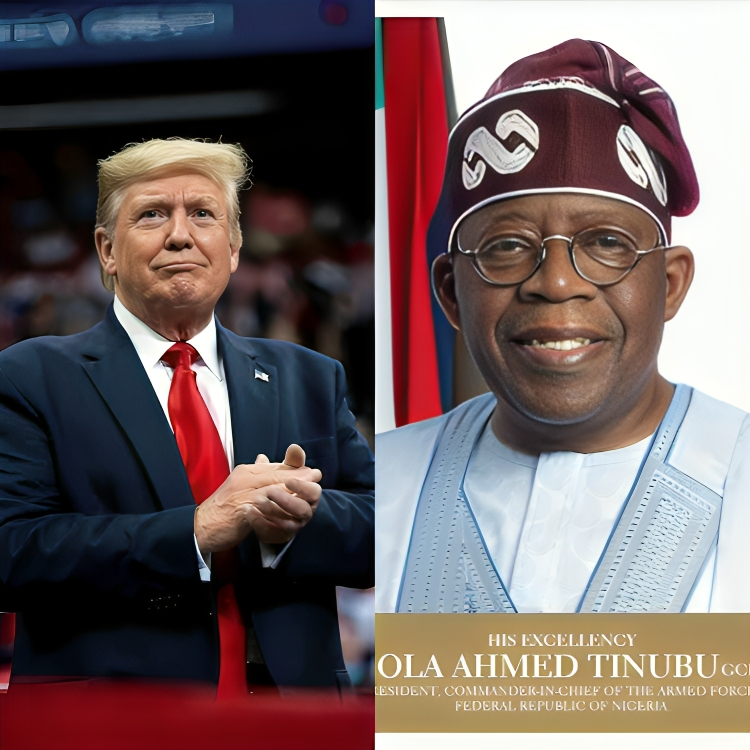
The designation of Nigeria as a Country of Particular Concern (CPC) for religious freedom violations marks a troubling misreading of Africa’s most populous nation. This is a truth held to be self-evident. President Donald Trump’s recent declaration, coupled with threats of military intervention and aid suspension, is a fundamental misunderstanding of Nigeria’s complex security landscape. Yes, that is what it is.
To be clear, because Nigeria is still a developing society where God is perceived as potent in explaining reality and seeking prosperity, religion, for most people, remains what I choose to describe as the apple of their eye. A French sociologist, Auguste Comte, classified it as Theological Society.
However, while religious tensions exist, the conflicts that have bloodied Nigerian soil over the past two decades tell a different story. That story is one of ethnic rivalries, resource competition, and political power struggles rather than systematic persecution of any faith. The true drivers of violence in Nigeria are political and economic in nature, and if these issues are misdiagnosed, America’s intervention, no matter how well-intentioned, will only exacerbate what it is supposed to mitigate. Let us go a bit into history.
The Ife-Modakeke crisis, which flared repeatedly between 2000 and 2002, killed hundreds and displaced thousands. Both communities are predominantly Yoruba and overwhelmingly Christian. Yet they fought bitterly over land rights and political control. The violence had nothing to do with religious persecution. It was a clash between indigenes and settlers, between claims to ancestral ownership and the rights of long-term residents. The machetes and guns that took lives made no distinction between Methodist and Catholic, Pentecostal and Anglican.
Similarly, the Aguleri-Umuleri conflict in Anambra State erupted violently in 1999. It pitted two Igbo communities against each other over a land dispute that stretched back generations. Both communities are Christian, sharing the same religious values and often the same church denominations. The conflict claimed over a thousand lives and destroyed property worth billions of naira. Religion played no role in the violence. Territorial claims and historical grievances drove neighbors to slaughter neighbors.
The Ezza-Ezillo boundary war in Ebonyi State followed the same pattern. These sister communities, both predominantly Christian, engaged in deadly clashes over land demarcation that killed hundreds between 2007 and 2012. Churches were destroyed not because they were churches, but because they stood on contested territory. Pastors buried victims from both sides. The conflict demonstrated how ethnicity, land scarcity, and local politics fuel Nigeria’s communal violence. Religious intolerance is not the key factor.
The Niger Delta militancy, which peaked between 2006 and 2009, had nothing to do with religion whatsoever. The region is predominantly Christian. Militants fought against environmental degradation and economic marginalization caused by oil extraction. They attacked pipelines, kidnapped oil workers, and battled security forces over resource control and revenue allocation. Religion never entered the equation. This was about economic justice, environmental destruction, and political power.
Boko Haram and its splinter group, the Islamic State West Africa Province (ISWAP) represent genuine religious extremism. Even here, the narrative is more complex than wholesale Christian persecution. While these terrorists have indeed targeted churches and Christian communities with horrific brutality, they have killed far more Muslims than Christians. Mosques have been bombed, imams assassinated, and entire Muslim villages razed. The insurgents view most Nigerian Muslims as apostates deserving death for not embracing their radical ideology. Their violence is indiscriminate terror aimed at destroying the Nigerian state and establishing a political authority modeled after their worldview of terror, brutality, bestiality and death. It is not a government-sanctioned campaign against Christians; it is an anti-Nigerian, anti-Muslim, and anti-Christian campaign of death.
Armed herdsmen attacks are perhaps the most misconstrued of Nigeria’s conflicts. Essentially, the onslaughts stem from climate change, desertification, and the collapse of traditional grazing routes. As the Sahel dries up, Fulani herders, who are predominantly Muslim, push southward. They encroach on farmlands. The resulting clashes with predominantly Christian farming communities have been unjustifiably deadly. This is where state policy and strong, decisive leadership are urgently needed. But these are resource conflicts, not religious wars. Herders have also clashed violently with Muslim farming communities in the north. The violence follows grazing patterns and agricultural calendars, not prayer schedules.
The killings in the Southeast target government installations, security personnel, and perceived collaborators. These attacks occur in a predominantly Christian region. Both perpetrators and many victims share the same faith. The violence is driven by separatist grievances over political marginalization, not religious persecution. Churches continue to operate freely across the Southeast. Religious practice remains unfettered despite the security challenges.
It is necessary to say that Trump’s designation is likely less about genuine religious freedom concerns. Given the loudest voices in America that have pushed this agenda since March, and leafing through Nigeria’s foreign policy in the Middle East as openly declared during the last General Assembly of the United Nations, the grouse of the Trump administration can easily be understood. This is particularly true regarding the Tinubu administration’s support for a two-state solution in the Israeli-Palestinian conflict. Note that Nigeria refused to relocate its embassy to Jerusalem. Nigeria has consistently voted at the United Nations in favor of Palestinian rights. It has maintained diplomatic relations with both Israel and Palestine. This balanced approach contrasts sharply with American policy under Trump, who demonstrates unwavering and total support for Israeli territorial claims. The religious freedom designation appears to be a punitive measure. It is designed to pressure Nigeria into aligning with Washington’s Middle East agenda. The country’s complex security situation is used only as a convenient pretext.
As a result, President Bola Tinubu’s administration must navigate this diplomatic crisis with strategic finesse and principled resolve. First, Nigeria should prepare a comprehensive dossier. This should document the true nature of its internal conflicts. It must show detailed evidence that government policy does not discriminate against any religion.
Second, Abuja should engage directly with Congress, the State Department, and faith-based organizations in America. It must bypass presidential rhetoric to build understanding among policymakers who recognize the real issues.
Third, Nigeria must strengthen its domestic counterterrorism efforts. It must improve security across all regions. This demonstrates tangible commitment to protecting all citizens regardless of faith.
Fourth, the administration should invite international religious freedom monitors and human rights organizations. This is for independent assessments, showing transparency and confidence in its record.
Fifth, Nigeria should leverage its relationships with other African nations and the African Union. This will present a united front against ostensible diplomatic overreach which Trump’s invasion threat entails.
Sixth, President Tinubu should privately explore modest adjustments to Middle East policy to ease tensions. This might involve enhanced diplomatic engagement with Israel.
Seventh, Nigeria must accelerate economic reforms. These must address the root causes of conflict: poverty, unemployment, anachronistic grazing practices, and resource scarcity, while broader security issues like proliferation of small arms and light weapons, drug use and abuse, and corruption within the hierarchy of security forces must be combated squarely.
Finally, the administration of Bola Tinubu should maintain dignified restraint in public statements. It must avoid inflammatory rhetoric while firmly defending Nigeria’s sovereignty and its unblemished constitutional commitment to religious freedom.
The goal is not capitulation but calibrated diplomacy. It must protect national interests while restoring constructive dialogue with Washington.