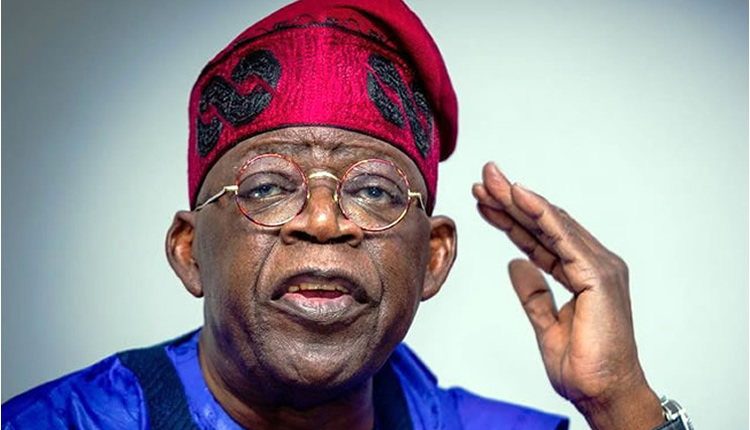
President Bola Tinubu’s recent assertion that Nigerians are better off in petrol pricing than many African countries does not survive a basic comparison with facts on the ground. Across the continent, oil-producing nations are not experiencing Nigeria’s extreme fuel burden, and the numbers tell a stark, uncomfortable truth.
In Angola and Algeria—both oil-producing states like Nigeria—petrol remains significantly cheaper. Angola records pump prices roughly between ₦450–₦470 per litre, while Algeria hovers around ₦500 per litre. These are not oil-importing economies; they are hydrocarbon producers with far more stable domestic pricing systems.
Nigeria’s reality is brutally different. Despite being a major crude oil exporter, petrol sells for about ₦1,350 per litre in many locations. This contradiction exposes a structural failure: production does not translate into affordable domestic energy supply.
The core difference is refining capacity. Algeria and Angola operate functional, state-supported refineries that process a significant portion of their domestic crude. Nigeria, by contrast, has historically depended on imported refined products due to years of neglect, mismanagement, and near-collapse of state-owned refineries.
The situation is worsened by the prolonged dysfunction of Nigeria’s government-owned refineries. For years, facilities in Port Harcourt, Warri, and Kaduna have either operated below capacity or remained comatose, effectively turning Africa’s largest crude producer into a dependent importer of refined fuel.
Into this vacuum has stepped the privately owned Dangote Group refinery, a massive industrial intervention that underscores how the private sector is now doing what the state failed to do for decades. Yet even this development cannot immediately fix decades of systemic breakdown.
The removal of fuel subsidies has further exposed the structural weakness of Nigeria’s downstream sector. Without local refining capacity to cushion pricing shocks, global crude benchmarks and foreign exchange volatility now pass directly and brutally into domestic pump prices.
Since geopolitical instability in the Middle East disrupted global oil supply chains, fuel-import-dependent economies have suffered the most. Nigeria, ironically an oil exporter, behaves like a net importer in its pricing structure, absorbing global shocks without insulation from domestic refining buffers.
Contrast this with countries such as Senegal, Burundi, South Africa, and Seychelles—many of which are non-oil producers yet face high fuel prices due to import dependence. Nigeria’s tragedy is that it has oil but behaves like these import-reliant economies.
The deeper issue is policy inconsistency and decades of underinvestment in refining infrastructure. Instead of building resilience within the downstream sector, Nigeria leaned heavily on imports, intermediaries, and subsidy regimes that masked inefficiencies without solving them.
The truth is uncomfortable but unavoidable: Nigeria’s fuel crisis is not about global scarcity, but domestic failure. Until refining capacity becomes fully functional and policy execution becomes disciplined, comparisons with Algeria and Angola will continue to expose a widening credibility gap between political claims and economic reality.