There are encounters that linger long after the conversation has ended. Mine was with an elderly political sage whose name I will never disclose. Neither will I reveal his photograph. He has spent decades watching Nigeria’s politics unfold from close quarters, accumulating the sort of institutional memory that cannot be found in books or television studios. His words were measured, calm and disturbingly confident.
He did not claim to possess prophetic powers. Instead, he spoke with the conviction of a man who believes that Nigerian elections often obey familiar patterns rather than public expectations. His reading of the 2027 presidential election was less about personalities than about the forces that shape political outcomes in Nigeria.
According to him, the months preceding the election would be unforgiving for President Bola Tinubu and the APC. Public frustration over economic hardship would intensify. The opposition, he argued, would weaponize inflation, insecurity, unemployment and declining purchasing power to build sympathy among ordinary Nigerians. The governing party, he said, would enter the contest carrying the heavy burden of incumbency.
Yet, he insisted that public anger alone would not determine the final outcome. As election day drew closer, he predicted, identity politics would gradually overshadow policy debates. Ethnic and regional loyalties, he argued, would reassert themselves, reshaping electoral calculations across the federation in ways that opinion polls and social media conversations rarely capture.
His assessment of the North was particularly striking. He believes former Vice President Atiku Abubakar would remain the principal beneficiary of northern sentiment. Even if elite interests fractured, he argued, a substantial portion of northern political opinion would naturally gravitate toward one of its own, making the region a fiercely contested battleground.
For Tinubu, however, he saw a different path to survival. The President, he argued, would lean heavily on the APC’s formidable political machinery and the influence of governors elected on the party’s platform. Some governors, he suggested, might privately nurse different preferences, but the institutional weight of the ruling party would ultimately favour its candidate where it matters most.
His verdict on Peter Obi was equally unsparing. The remarkable momentum Obi enjoyed in 2023, he argued, would be difficult to recreate. His political platform, he said, would struggle to expand meaningfully in the North, while even in the South-East, where Obi commands emotional support, the APC and other entrenched political interests would mount a far stronger resistance than before.
Then came the most unsettling part of our conversation. He expressed concern that electoral manipulation and widespread vote inducement could feature more prominently than in previous contests. These were his personal fears and expectations, not established facts. In his estimation, the political environment would become even more transactional, potentially diminishing the impact of the kind of spontaneous voter enthusiasm that helped reshape parts of the electoral map in 2023.
Ironically, he did not predict an easy victory for Tinubu. On the contrary, he believes the President’s popularity would remain under pressure because of widespread dissatisfaction with his administration. Yet he maintained that electoral popularity and electoral victory are not always identical in Nigeria’s complex political landscape, where organization, alliances and institutional strength often prove decisive.
I left that conversation neither persuaded nor dismissive. Elections are ultimately decided by voters, institutions and events that can still change dramatically before 2027. But the old man’s reflections offered a sobering reminder that beneath the daily noise of partisan rhetoric lies a deeper political reality—one where sentiment, structure, ethnicity, organization and power frequently intersect in unpredictable ways. Whether his assessment proves accurate remains to be seen. It is, after all, one man’s reading of Nigeria’s political chessboard, not a verdict on its future.
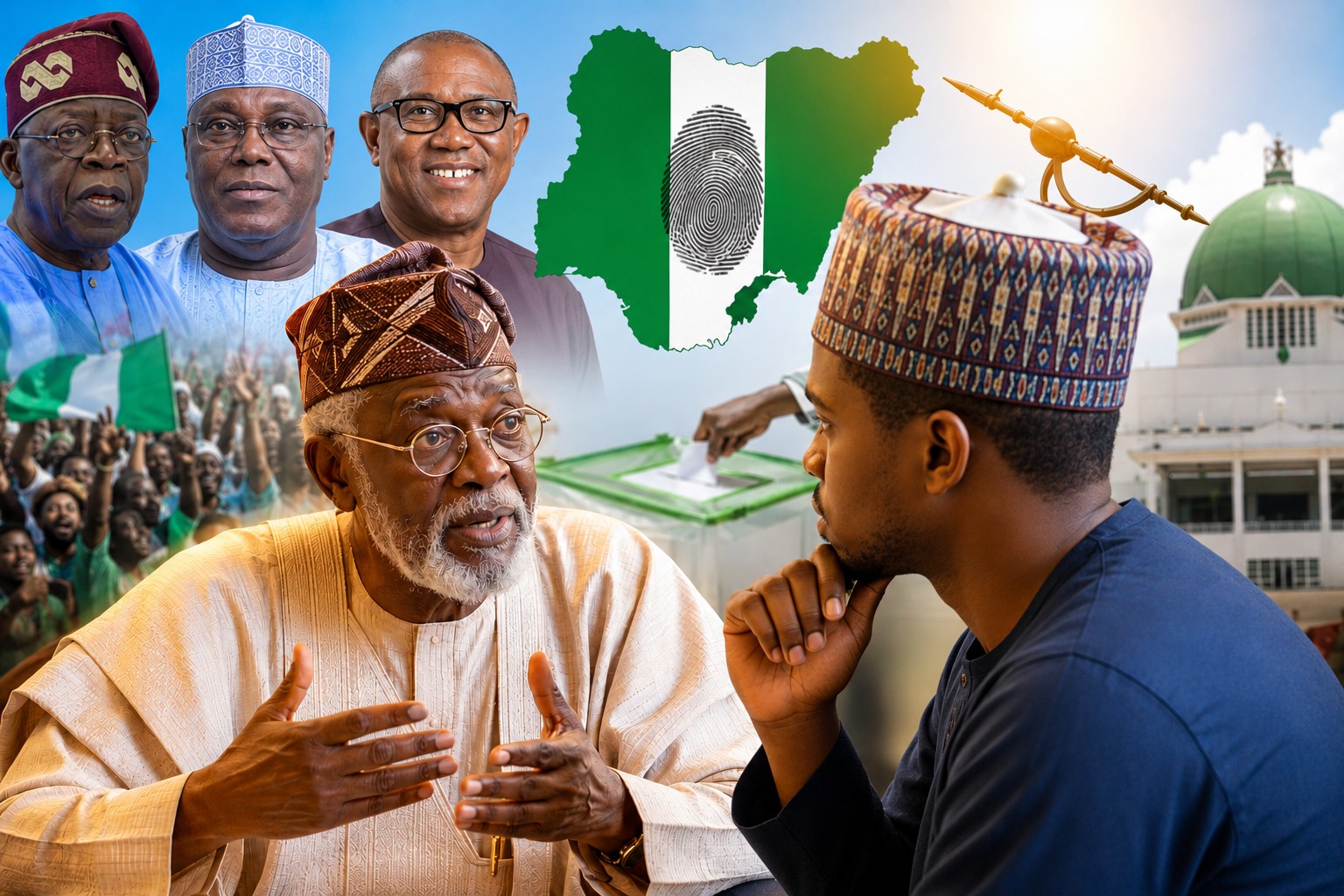
*The Image Used To Illustrate The Story Is AI Generated*