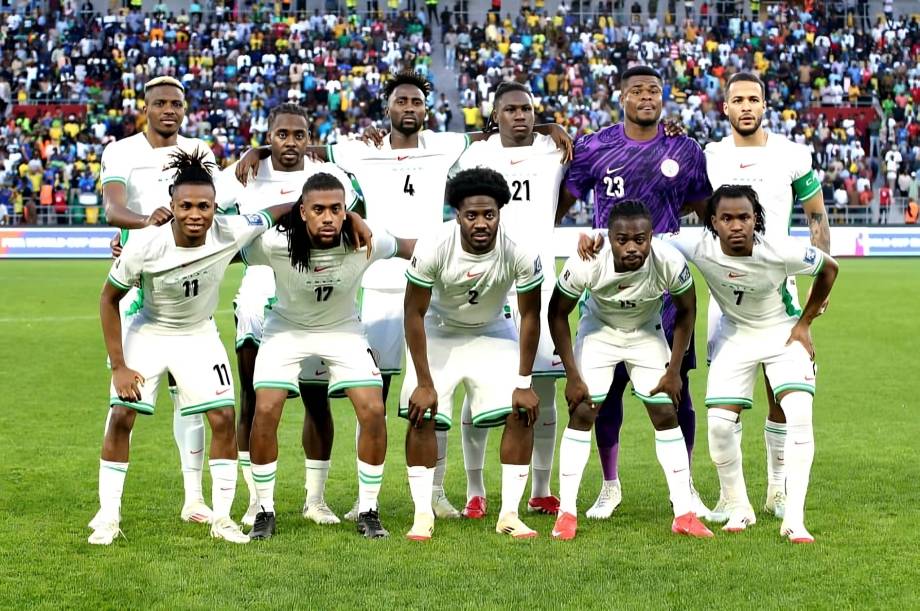
If there is one African country that has won the admiration of the football world at the ongoing 2026 FIFA World Cup, it is Cape Verde. Not because the Blue Sharks lifted the trophy. Not because they reached the quarter-finals. But because they demonstrated everything football should represent—courage, discipline, resilience, organisation and an unyielding belief that no opponent is too mighty to confront.
For a nation of barely 500,000 people, Cape Verde has rewritten the narrative of African football. The Blue Sharks did not merely participate at the World Cup; they competed with conviction, earned global respect and reminded the world that football greatness is not measured by population size or economic power, but by vision, planning and commitment.
Cape Verde’s journey was remarkable. They battled through the group stage with fearless displays to qualify for the knockout phase, becoming one of Africa’s brightest stories at the tournament. Their campaign finally ended in the Round of 32 after an enthralling contest against Argentina. Although they lost, they left the pitch with their heads held high. It was a defeat wrapped in honour. They refused to be intimidated by one of football’s traditional giants, matched the South Americans for long spells and exited the competition with the applause of football lovers across the globe.
That performance was far more valuable than many hollow victories. Cape Verde made a statement. They showed character. They showed tactical maturity. Above all, they showed that determination can bridge the gap between minnows and giants.
Their exploits inevitably evoke memories of Nigeria’s unforgettable debut at the 1994 FIFA World Cup in the United States. That Super Eagles side announced itself to the world with fearless attacking football, dazzled in the group stage and came within minutes of eliminating Italy—the Azzurri—in the Round of 16 before fate cruelly intervened. That generation earned worldwide respect because it played with confidence, hunger and purpose.
Sadly, more than three decades later, Nigerian football has travelled backwards while smaller nations continue to move forward.
Nothing illustrates this decline more painfully than the fact that Nigeria, a country of over 200 million people, failed to qualify for the FIFA World Cup for the second consecutive time. It is an indictment of everyone entrusted with managing the nation’s football. There can be no excuse for such monumental failure. Population does not score goals, but neither should a football giant repeatedly surrender its place on the biggest stage to countries with a fraction of its resources and talent.
Cape Verde’s success is not an accident. It is the product of planning, competent administration, effective talent development and a football culture that rewards merit. Nigeria possesses far greater human resources, a larger football market and an endless stream of gifted players. Yet administrative incompetence, poor planning, endless crises and a lack of accountability continue to waste those advantages.
The most disturbing aspect of Nigeria’s decline is the absence of responsibility. In countries where excellence matters, repeated failure attracts consequences. Officials resign. Administrators accept responsibility. Institutions undergo reforms. In Nigeria, however, failure has become a comfortable occupation. Despite missing the World Cup twice in succession—a national embarrassment by every standard—many officials at the Nigeria Football Federation remain firmly seated, behaving as though nothing has happened. That is unacceptable.
No serious football nation rewards failure with continuity. Leadership must carry consequences. If those who presided over this historic decline cannot voluntarily accept responsibility, then the system itself has become part of the problem.
The Blue Sharks have done more than inspire Africa. They have exposed the myth that Nigeria’s football decline is inevitable. They have proved that vision defeats excuses, organisation defeats chaos and competence defeats mediocrity.
The lesson from Cape Verde is simple. Football respects preparation, not population. It rewards planning, not politics. It honours competence, not entitlement. Nigeria must learn that lesson before another generation is wasted.
Until Nigerian football is rescued from complacency, mediocrity and administrative arrogance, the Super Eagles will continue watching the World Cup from television screens while smaller nations write history on the pitch.
Cape Verde may have exited the tournament, but they departed as heroes. Nigeria, by contrast, never arrived.
That is the painful truth the country’s football authorities must confront.