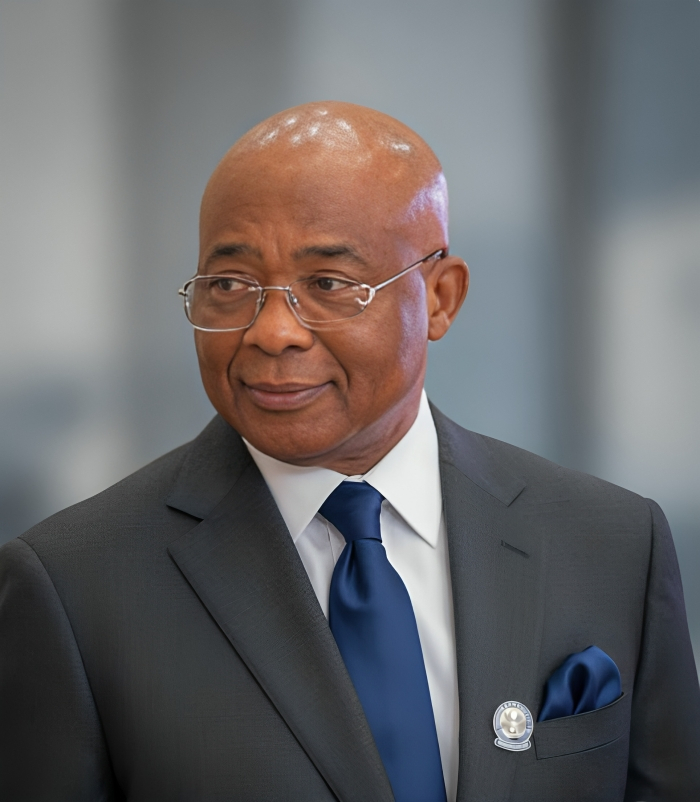
A former chieftain of the Peoples Democratic Party (PDP) in Imo State and public affairs analyst, Stanley Uche, has said the inability of Owerri and Okigwe zones to agree on the interpretation and implementation of the Charter of Equity could ultimately leave Governor Hope Uzodimma with the power to determine his successor from any zone in 2027.
Uche, a lawyer who is no longer active in partisan politics, said both zones had compelling arguments for their claims to the governorship, making it difficult for either side to easily concede to the other.
He spoke in an interview with INNONEWS during which he assessed the Uzodimma administration, the Charter of Equity and the political calculations surrounding the 2027 Imo governorship election.
According to him, the Charter of Equity, as it currently stands, has no force of law and therefore cannot compel any of the three senatorial zones to support a particular candidate or prevent qualified aspirants from contesting.
“My answer to all this is that it’s not possible. As long as there is no legal backing, it is certainly not possible to enforce it here in Imo State,” Uche said.
He described the situation as a potential source of further confusion, particularly for Owerri and Okigwe, which are currently advancing competing claims.
Owerri Zone argues that it has not had a sufficient opportunity to occupy the Government House, pointing to former Governor Emeka Ihedioha’s seven-month tenure before his removal from office.
Okigwe Zone, however, maintains that it is still owed four years because former Governor Ikedi Ohakim spent only one term in office.
Uche said both positions had compelling arguments and that the depth of the competing interests made an agreement between the two zones difficult.
“For me, I do not foresee a situation where Owerri and Okigwe will sit down and agree. It will be practically, politically impossible,” he said.
Uzodimma may ultimately decide
Uche said a failure by Owerri and Okigwe to reach an agreement could create a situation in which Uzodimma becomes the decisive political actor in the succession process.
“Since Okigwe and Owerri may not agree, then the governor will now intervene. And when he intervenes, it now becomes a ding-dong affair,” he said.
According to him, Uzodimma could eventually choose a successor from either Owerri or Okigwe, depending on the political circumstances at the time.
“He may pick somebody from Owerri, he may pick somebody from Okigwe,” he said.
Uche said the governor could also look beyond the established political class in making his choice.
“He can choose anybody. He can choose outside the political class, he can choose within the political class,” he said.
The analyst said the most important consideration for Uzodimma would likely be trust rather than the competing arguments over the charter.
“What is key for the governor is trust. He has to look for somebody he can trust, no matter where that person comes from,” Uche said.
He said Uzodimma would likely favour a person who understands him, has demonstrated loyalty and has the capacity to continue from where he stops.
According to Uche, such considerations could ultimately outweigh the arguments being advanced by politicians campaigning around the Charter of Equity.
He further suggested that some of those currently championing the charter might not necessarily be among those the governor would eventually consider as his successor.
“I see it that these people who are talking about this Charter of Equity have already built substantial grounds of support for the governor to pick and choose whoever he wants to succeed him,” he said.
Owerri‘s Quest
Uche also said Okigwe appeared more united in its pursuit of the governorship than Owerri.
He observed that much of the current agitation from Owerri appeared to be coming from APC politicians, raising questions about the involvement of prominent Owerri politicians outside the ruling party.
He cited former Deputy Speaker of the House of Representatives, Emeka Ihedioha, and Martin Agbaso as examples of Owerri politicians who appear outside the current mainstream of the agitation.
Uche said the difference in political alignment could make it more difficult for Owerri to present a united position in negotiations with Okigwe.
Orlu aspirants cannot be excluded
On the emergence of an aspirant from Orlu Zone, Uche said any aspirant from the zone has a constitutional right to contest the governorship.
“Orlu zone has constitutional right to contest for the governorship of Imo State. We should understand that fact,” he said.
He maintained that the Charter of Equity, whether accepted politically or not, could not legally prevent a qualified candidate from any of the three zones from seeking the office.
According to him, the political argument behind the charter is different from the constitutional position.
He said supporters of the charter expect Orlu Zone to recognise that Owerri has had only a brief return to Government House through Ihedioha, while Okigwe similarly argues that Ohakim did not complete two terms.
“These are entrenched interests,” Uche said.
‘I never said the charter will collapse’
Uche rejected the suggestion that he was predicting the collapse of the Charter of Equity.
“I didn’t say that. I never said so. I’m not saying it will collapse,” he said.
Rather, he said he was interrogating whether the charter could achieve its intended purpose without legal backing.
“The only thing I’m trying to do is to interrogate this Charter of Equity properly,” he said.
Uche argued that if the charter was intended to be enforceable, it should have been taken to the Imo State House of Assembly and converted into law.
“It should have been taken to the House of Assembly for it to be passed as law,” he said.
He also criticised what he considered the narrowness of the process through which the charter was conceived.
According to him, broader sections of Imo society should have been involved, including youths, women, students and market leaders.
He said a wider consultation would have given the charter greater legitimacy, even if it did not produce complete agreement.
Uche said the present situation leaves the charter as a political document without the legal force required to compel compliance.
He added that unless Owerri and Okigwe can overcome their competing claims, their disagreement could ultimately leave Governor Uzodimma in the position of determining who succeeds him in 2027.