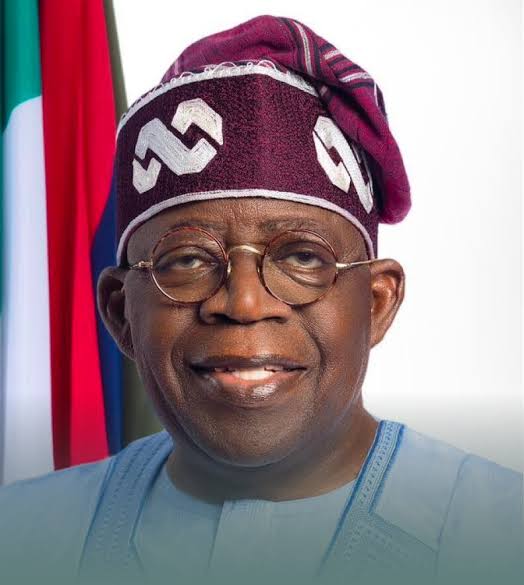
I did not set out on this trip to write about politics. I went east the way I usually do, to see family, eat well, and escape the noise of Lagos for a week. But somewhere between the Enugu Onitsha expressway and a plate of ofe nsala in Owerri, I found myself unable to ignore what was happening in plain sight: a political operation quietly rewiring how the Southeast is being courted ahead of 2027.
My first stop was Enugu. I had expected the usual: a few billboards, maybe a convoy blaring campaign jingles past traffic. Instead, what I noticed was structure. A cousin who works at New Artisan mentioned, almost offhand, that there were now ward coordinators going around almost discreetly, mobilizing and campaigning. When I asked around, the name that kept coming up was the Renewed Hope for Greater Nigeria, RHGN, and a man named Mazi Franklin Ngoforo, who I learned had been installed barely months ago as the group’s Deputy National Leader for the Southeast. I was told he came onboard when other pro-Tinubu initiatives in the region were not hitting the ground running. It struck me as an unusually candid admission for a political group to make: that their first approach had not worked, and they were trying something more disciplined.
By the time I got to Onitsha, I started paying closer attention. I had gone to the Main Market for provisions, and instead of the usual chaos of hawkers and horn honking, I found clusters of young men in matching tags speaking to traders in small groups, not shouting slogans, just talking. It reminded me of something I would later read about, a similar campaign at Aba’s Ariaria market, where Ngoforo himself had shown up to flag off what they called a shop-to-shop drive, telling traders that currency reforms and subsidy removal had, in his telling, improved their access to foreign exchange and reduced the arbitrage that used to squeeze importers. Whether or not every trader I saw believed the pitch, the method was unmistakable. This was not a rally. It was a conversation, repeated one stall at a time.
It was in Owerri, though, that the scale of the thing became clear to me. I happened to be staying near a hotel where, I later found out, RHGN had held a press briefing announcing something they called a “Booth Army”, fifty people per polling unit across the five Southeast states, tasked not just with getting out the vote but with staying at the collation process to watch it. Ngoforo had apparently told reporters there that too many Nigerian elections had been decided not at the ballot box but somewhere between the booth and the collation centre, and that this would not happen on his watch. I found the phrase striking enough that I asked a local journalist friend about it over dinner. He confirmed the group was targeting four million votes for Tinubu in the region and had already built out state, local government and ward level teams in Abia, Anambra, Ebonyi, Enugu and Imo, not future plans, he said, but existing structures.
There was a third thread I only pieced together after I got back to Lagos. Ngoforo had also been working other rooms that same stretch: receiving student union leaders in Owerri to press the case that NELFUND, the federal student loan scheme, was real and accessible and being underused by Southeastern students, and convening a closed-door meeting in Awka with Pentecostal clerics from across the five states, urging them to back Tinubu’s re-election. It looked like the same logic applied to different audiences, traders through their pockets, students through their bursars, churches through the pulpit.
What struck me most, travelling as an outsider looking in, was how unglamorous the whole thing felt. There was no single moment of spectacle to point to. No massive rally, no viral clip. Instead there were small, repeated touchpoints: a market wing here, a campus wing there, a meeting with the Association of Igbo Town Unions that a friend in Owerri mentioned had happened weeks earlier, where Ngoforo reportedly sat with the group’s national president to court the more than six thousand town unions that hold real sway over community life across Igboland and its diaspora. In a region where politics has often been experienced as something done to it from Abuja, this felt like an attempt to work through the region’s own social fabric instead of around it.
I also came away impressed by how deliberately the group has tied its ground presence to a policy argument rather than empty loyalty. From what my journalist friend explained over dinner, the pitch traders and town unions are hearing is not simply “support Tinubu” but a specific case: that subsidy removal has freed up federal allocations now visible in road and infrastructure projects across the states I passed through, and that reforms to the foreign exchange market are meant to help the very importers and traders I watched being approached in Onitsha and Aba. Whether or not one buys every part of the argument, it is a more substantive pitch than the sloganeering I remember from past campaign seasons.
I left the Southeast with a real sense of optimism about where this is heading. What I witnessed was not a fleeting show of political theatre but something built to last, structures reaching into wards, markets, campuses and town unions long before a single vote is cast. If Ngoforo and RHGN keep at this pace of organising, methodical rather than loud, rooted in the community rather than parachuted onto it, it is easy to see this translating into real support for Tinubu when the Southeast goes to the polls in 2027.
Whether that support materialises fully is still a question for the future. But as someone who simply went home to visit family, I came back convinced that the ground beneath the Southeast’s political surface is shifting in Tinubu’s favour, market stall by market stall, ward by ward, one conversation at a time.
Dr. Uwakwe is a political scientist and writes from Surulere, Lagos