By Emma Chinedu
There is a kind of childishness that comes over Nigerian politics whenever power is at stake, a pretence that we are searching for angels to govern us when every serious country in the world knows that leadership belongs to flawed human beings, drawn from the same history, weaknesses and contradictions as the people they seek to lead. Nigeria is no exception, yet the opposition has once again walked away from the hard work of democratic persuasion and begun scouring foreign files and offices for scraps it can turn into a fresh political weapon against an opponent.
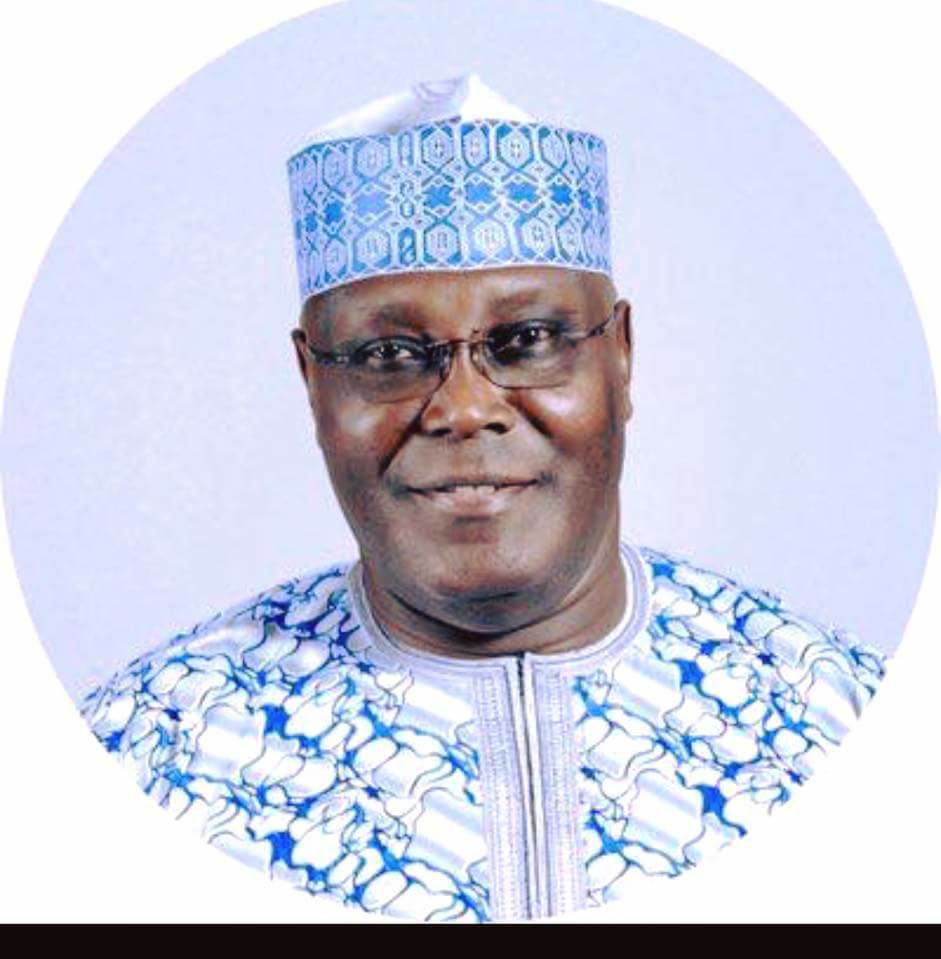
The relentless campaign by ADC candidate Atiku Abubakar to press for the release and publicise decades-old files in the custody of the United States Federal Bureau of Investigation concerning President Bola Ahmed Tinubu is the latest manifestation of this syndrome. Atiku presents this cross-border campaign in the noble language of public interest and the right to know. But its political intent is clearly to reopen in Washington a verdict he could not overturn in Nigeria. That is lawfare by other means. Atiku wants American agencies to furnish the material for a permanent campaign of suspicion against the Tinubu presidency, as if Nigerian institutions, Nigerian courts and Nigerian votes were not enough.
No democracy operates on the expectation of angelic leadership. If Nigerians are looking for flawless rulers, they will have to search for them in heaven. No society rises above itself. Its leaders come from the same country, the same history and the same human condition as the people they lead.
The United States, whose files Atiku treats as a moral oracle, offers a particularly unforgiving lesson. Donald Trump went into the 2024 election with 34 felony convictions returned by a New York jury after a public criminal trial. For years, state and federal investigations had shadowed his public life, while the global media dissected every filing and courtroom turn, expecting American voters to recoil in moral horror. His record lay before them in open court and in the public record, yet they made their own judgement and returned him to the White House. He was sworn in as President because voters judged the whole man, his record, his capacity, the direction he offered and the country’s interests as they saw them.
Atiku should understand what that means. His path to the Nigerian presidency does not run through Washington or an FBI docket. It runs through Nigerian voters, and he must persuade them that he has a better answer to the country’s future.
If the United States, with all its power and moral posturing, can separate a leader’s legal history from his present mandate, why should Nigeria impose on itself a harsher standard? Why must a Nigerian leader be an unblemished angel before his voters may judge him fit to govern? Is that not the height of democratic unseriousness? How did we acquire this wretched habit of looking outside ourselves for standards that even the West does not live by?
Atiku has chosen to feed that weakness, issuing press releases that leave the impression that Washington is sitting on a smoking gun, one that will decide the next election before Nigerians get to decide it for themselves. That is the illusion being sold.
All the heat around these FBI files comes back to a civil asset forfeiture case in Chicago more than thirty years old. It was a civil case. It did not produce a criminal conviction. Yet Atiku’s people want Nigerians to read it as though it were one.
These facts have not changed in thirty years. They are neither new nor secret, and they do not disqualify Tinubu under the law. Yet Atiku is trying to pass off these thirty-year-old administrative echoes as fresh, damning revelations. He has hired Washington lobbyists, including Von Batten-Montague-York, to circulate the documents among Capitol Hill staff and international journalists. It is a fishing expedition. The point is to lift snippets of investigative prose, unverified interview notes and agency chatter out of their setting, then build a case for moral disqualification where no legal disqualification exists.
Raw malice drives this Washington campaign, a deliberate effort to keep a cloud over the presidency and make Nigeria look like a permanent scandal in the eyes of the world because Atiku cannot accept that the Nigerian electorate has repeatedly refused to hand him the presidency. If he cannot rule Nigeria, then he will do everything in his power to make its elected leader appear illegitimate. That is the scorched-earth politics he has chosen, putting personal vindication ahead of national stability
The most offensive thing about this multi-million-dollar Washington campaign is the contempt it shows for Nigerian democratic institutions and for Nigerian voters themselves.
Tinubu’s background, identity and legal history have been in public view for a quarter of a century. They were on the table when he ran for Governor of Lagos in 1999 and again in 2003. They were on the table throughout his years at the centre of the progressive opposition, and they were argued in public and in court before, during and after the 2023 presidential election. None of this surfaced yesterday. Nigerians knew the arguments before they voted.
Nigeria does not have to go to Washington to vet its leaders. INEC cleared Tinubu. The Code of Conduct Bureau examined him. The Presidential Election Petition Tribunal heard the opposition’s case, weighed the certified documents and dismissed their objections. The Supreme Court, the final and absolute arbiter of our constitutional democracy, reviewed the matter and affirmed his mandate.
When Atiku Abubakar takes this fight to Washington and asks the FBI and DEA for material to deploy against Tinubu ahead of 2027, he is telling the world that the judgement Nigerians made in 2023 can be discredited from abroad, and that the next election should be shaped by whatever a foreign agency releases rather than by the case the candidates make before Nigerians. Put plainly, he wants a file in Washington to do the work of persuading voters at home.
Democracy is a contract between the leader and the led, not between a candidate and a foreign intelligence agency. Nigerians made their judgement in 2023 after weighing the candidates, their records and their promises; in 2027, they will make another. Atiku’s task is to persuade them that he deserves that next verdict, not to use a thirty-year-old civil matter in Washington to write the result before the campaign is fought.
Tinubu has a country to govern. He is dealing with economic distortions left by years of decay, while trying to steady the monetary system, attract investment, expand infrastructure and steer Nigeria through a difficult global economy. It is hard work, and Nigerians will judge it by what they see in their lives, not by what Washington lobbyists choose to circulate.
Atiku will say his latest campaign is about the cost of living, and he has even promised to restore petrol subsidy despite arguing in 2023 that it was unsustainable; but that only exposes the contradiction at the centre of his campaign, because when Nigerians worry about inflation, food, transport and jobs, his answer is to turn archived American court dockets into a campaign weapon abroad while promising at home to return the country to the same subsidy regime he once said Nigeria could not sustain. Indeed, we are witnessing the last-ditch politics of a man prepared to say whatever he thinks might carry him into Aso Rock.
The FBI records saga will run its course, the files will be reviewed and the lawyers will have their say, but no pile of paperwork from Washington can give Atiku the political breakthrough he has spent years failing to secure before Nigerians, or settle 2027 before Nigerians have spoken. What will remain is the record of who stood for Nigeria and who stood against her dignity.
Leave the hunt for angels to theologians. Nations are governed by leaders who take hard decisions, bear the consequences and submit themselves to the judgement of their people. Bola Ahmed Tinubu is the democratically elected President of a sovereign Federal Republic. His mandate belongs to Nigerians, and in 2027 it will be renewed or rejected by Nigerians, not by a file in Washington.
Chinedu is a public affairs analyst based in Enugu