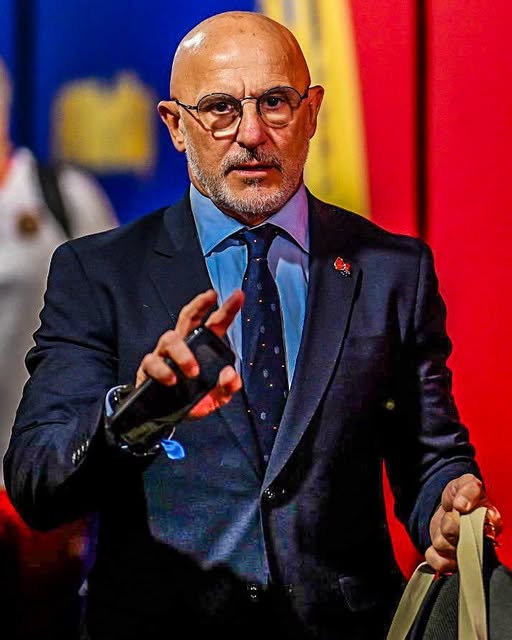
When Spain lifted another major international trophy under Luis de la Fuente, the triumph did not emerge from chance or a sudden burst of talent. It was the culmination of a carefully cultivated football philosophy stretching back more than a decade. The players who dazzled on the biggest stage were, in many cases, the same boys De la Fuente had nurtured through Spain’s youth ranks long before they became household names.

The pattern is impossible to ignore. In 2015, De la Fuente guided Spain to the UEFA Under-19 European Championship with a squad that included Rodri, Unai Simón and Mikel Merino. Rather than treating youth football as an isolated competition, Spain regarded it as the foundation of its senior national team. The objective was not merely to win youth trophies but to prepare future internationals.
Four years later, the same philosophy yielded another success. De la Fuente led Spain to the UEFA European Under-21 Championship in 2019, working with another generation that featured Dani Olmo, Fabián Ruiz, Mikel Oyarzabal, Ferran Torres, Unai Simón and Mikel Merino. Several of those players would soon become central figures for the senior national side, already familiar with the coach’s tactical demands and footballing identity.
The process continued at the Tokyo Olympics in 2021, officially branded as the Tokyo 2020 Games after the pandemic postponement. Spain claimed the silver medal under De la Fuente with a squad including Martín Zubimendi, Marc Cucurella, Pau Torres, Eric García and Pedri. Once again, the emphasis was not solely on medals but on preparing players for the highest level of international football.
That continuity explains why Spain’s senior team appears remarkably cohesive. The players understand the coach because they have spent years absorbing his philosophy. They know his tactical principles, his expectations and his methods. He, in turn, understands their strengths, weaknesses and personalities. Their relationship was forged long before they reached football’s grandest stages.
Modern football increasingly rewards such long-term planning. International success is no longer built on assembling the most talented individuals shortly before major tournaments. It depends on developing a recognisable football identity across every age group, ensuring that promotion to the senior team represents progression rather than reinvention. Spain has invested in that continuity, and the dividends continue to accumulate.
Nigeria’s football administrators would do well to examine this model closely. The country possesses no shortage of gifted footballers, yet coaching changes at virtually every level often disrupt player development. Youth teams frequently operate independently of the senior national side, while technical philosophies shift with each new appointment. The result is a cycle in which promising youngsters must repeatedly adapt to new systems instead of growing within one coherent football structure.
Building such continuity requires patience, discipline and institutional commitment. Coaches who demonstrate success with youth teams should not automatically disappear from the national set-up. They should be integrated into a broader technical framework that allows them to graduate alongside their players. Doing so would preserve tactical consistency, deepen mutual trust and smooth the transition from youth football to the Super Eagles.
Luis de la Fuente’s story offers a lesson that extends far beyond Spain. He did not simply inherit a golden generation; he helped create one. He taught many of these footballers as teenagers before leading them as accomplished professionals. It is a reminder that sustained international success is rarely accidental. It is built patiently, generation after generation, by coaches who know their players as boys and guide them as men. Nigeria’s football future may well depend on embracing that same philosophy.