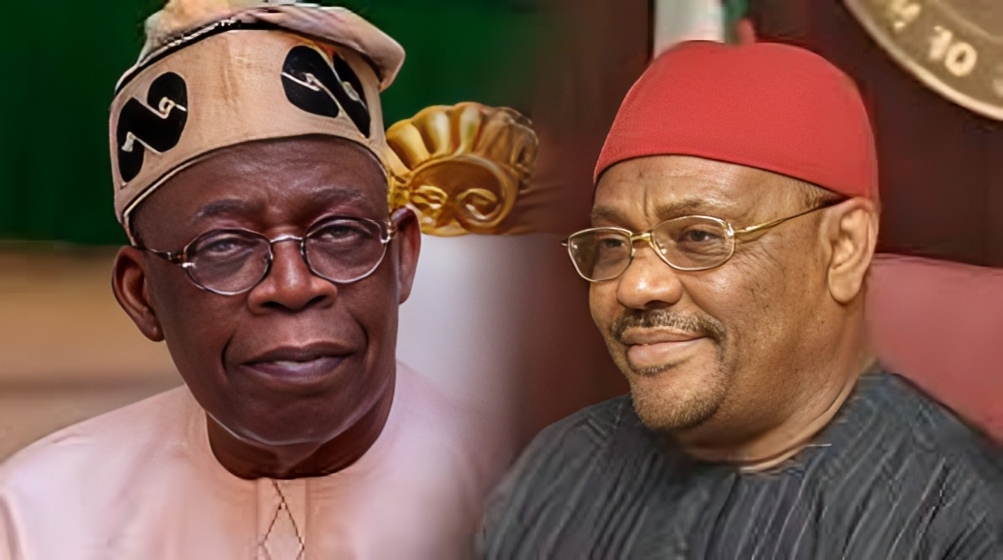
President Bola Ahmed Tinubu’s declaration of a state of emergency in Rivers State, suspending Governor Siminalayi Fubara, his deputy, and the State House of Assembly for six months, is both dramatic and consequential.
While many may applaud the President’s move to restore peace and order in the troubled state, one glaring question remains: why has Nyesom Wike, the Minister of the Federal Capital Territory and former Rivers State Governor, been spared despite his central role in the crisis?
Wike is no ordinary player in Rivers State politics. His fingerprints are all over the current turmoil. The crisis that has crippled the state stems largely from Wike’s overbearing influence on the administration of Governor Fubara.
It is no secret that the former governor refused to let go of his grip on the state, making it impossible for Fubara to govern effectively. Yet, while the President moved swiftly to suspend Fubara and his deputy, Wike continues to act with impunity.
The hypocrisy in this selective enforcement of discipline is troubling. If Fubara and members of the State House of Assembly were suspended for failing to work together, why has Wike, who has been the main provocateur in this crisis, been left untouched?
Wike’s notorious statement on national television that “heavens will not fall” if Fubara is impeached was a clear incitement to chaos. The President’s silence on this inflammatory remark is both deafening and disappointing.
Wike’s arrogance and unguarded statements fueled the political crisis in Rivers State. His unchecked actions escalated the matter. It is inconceivable that a man who openly stirs conflict and undermines the democratic process remains a minister of the Federal Repbulic.
Tinubu’s failure to call Wike to order or suspend him alongside Fubara raises serious questions about the President’s impartiality. The President’s handling of this crisis reeks of bias. By shielding Wike while targeting Fubara and others, Tinubu has set a dangerous precedent. This selective justice strengthens the perception that Wike enjoys the backing of the APC-led Federal Government.
If Tinubu is truly committed to restoring peace in Rivers, he must address all contributors to the crisis, regardless of their political affiliations or proximity to power.
Wike’s excesses are legendary. From his time as Governor of Rivers State to his current role as FCT Minister, he has shown a consistent disregard for decorum and democratic principles. His disruptive behaviour has made governance in Rivers State almost impossible. Yet, instead of reining him in, the Federal Government appears to have turned a blind eye, allowing him to act with impunity.
The fact that Wike’s actions were never curtailed lends credence to suspicions of collusion. Many Nigerians now believe that the APC led Tinubu administration deliberately enabled Wike’s destabilizing antics to achieve political objectives. This perception, whether true or false, erodes trust in Tinubu’s administration and undermines its credibility as an impartial arbiter of justice.
The President must understand that true leadership demands fairness. If the suspension of Fubara and the declaration of a state of emergency were necessary to restore order in Rivers, then Wike’s suspension as Minister of the Federal Republic is equally imperative. Anything short of this exposes Tinubu to accusations of double standards and undermines the integrity of his government.
Tinubu’s failure to suspend Wike not only emboldens the minister but also sends a dangerous message to other politicians: that those with Federal Government connections can act with impunity. This is a slippery slope that could destabilize other States and further weaken Nigeria’s already fragile democracy.
The President has an opportunity to correct this imbalance. Suspending Wike and holding him accountable for his role in the Rivers State crisis would send a strong message that no one is above the law. It would also reassure Nigerians that Tinubu’s government is committed to fairness and justice, regardless of political affiliations.
President Tinubu cannot afford to allow personal or political ties to cloud his judgment. Rivers State needs healing, and that process must begin with the removal of all actors who have contributed to its current crisis—including Wike.
The President must act now. Suspending Wike is not just a matter of political necessity; it is a moral imperative. Anything less would be a betrayal of the trust Nigerians have placed in him to lead with integrity and fairness. Tinubu must rise to the occasion and show that his commitment to justice is unwavering, no matter whose ox is gored.