Deputy Speaker of the House of Representatives, Rt. Hon. Benjamin Kalu, deserves commendation for breaking the silence and speaking truth to power over the demolition of buildings at the Lagos Trade Fair Complex — a move that has left many Igbo traders devastated and emotionally drained.
His bold appeal to President Bola Tinubu and Governor Babajide Sanwo-Olu to allow affected Igbos regularise their property documents instead of losing everything is not only humane but politically courageous.
At a time when most leaders from the South East prefer to stay quiet for fear of offending powerful interests, Kalu’s voice stood out like a ray of conscience in a sea of indifference.
But beyond Kalu’s commendable intervention lies a deeper, more troubling reality. The ongoing demolition is not just about buildings; it is about livelihoods, identity, and the persistent perception that Igbos are expendable when it comes to property rights outside their homeland.
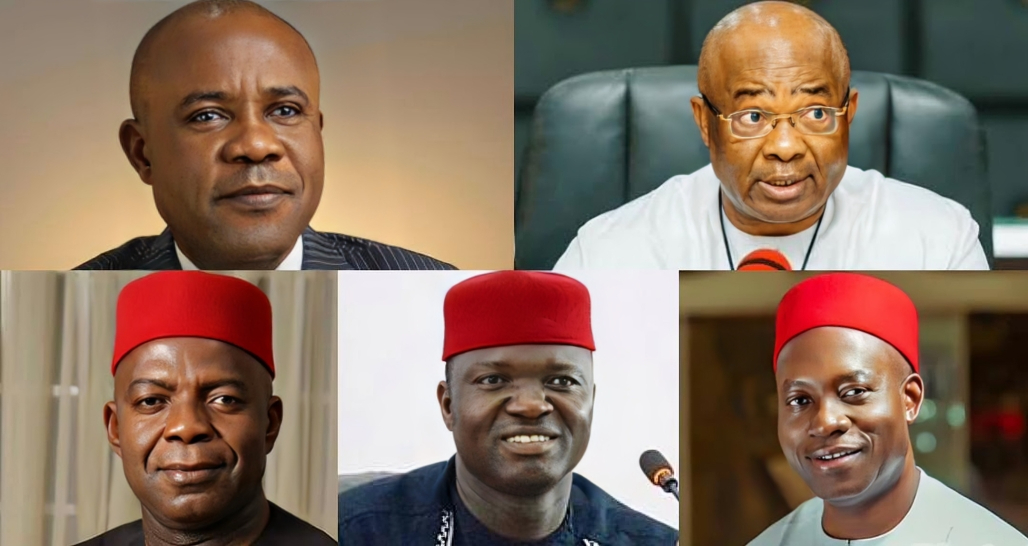
It is about the silence of those who should speak — the governors, senators, and influential figures from the South East who have chosen political convenience over defending their people. Where are the so-called leaders of Alaigbo? Where are the governors who claim to represent the interests of the South East? Their silence is not only shameful; it is complicit.
Benjamin Kalu spoke like a true statesman. His call on Tinubu and Sanwo-Olu to show compassion and allow the victims to regularise their documents is fair, lawful, and morally sound.
However, one man’s voice, no matter how loud, cannot replace the collective moral authority of an entire region. It is high time other Igbo leaders took a stand. Governance is not just about commissioning roads or building flyovers; it is also about standing up for justice when your people are unfairly treated.
The silence of the South East Governors’ Forum on this matter is deafening. How can a region that prides itself on enterprise and resilience fold its arms while its sons and daughters are being economically crippled in Lagos? The same Igbos who drive the state’s commercial engine are now being displaced in the name of “urban renewal.” If these demolitions were lawful, where was the dialogue? Where was the notice, the engagement, the human touch?
But while we condemn the demolitions and applaud Kalu’s courage, this incident also calls for deep introspection among Igbos themselves. For decades, the Igbo man has invested heavily in every part of Nigeria except home. From Lagos to Abuja, from Kano to Port Harcourt, the story is the same — sprawling estates, massive plazas, and industrial investments owned by Igbos who see their homeland as an afterthought. Yet, when crises strike, these same assets become targets. This self-inflicted economic vulnerability must end.
It is time for Igbos to look inward. The South East has the land, the brains, and the resources to replicate the commercial success of Lagos in the region.
The argument that insecurity has made the South East unattractive no longer holds water. The more Igbos neglect their homeland, the more it remains underdeveloped, and the easier it is for others to treat them as tenants elsewhere. Economic liberation begins with homegrown investment, not perpetual dependence on other people’s systems.
President Bola Tinubu, as a leader who claims to believe in equity and inclusion, must listen to Kalu’s appeal. The affected traders and property owners deserve fair treatment and due process. No democratic government should destroy people’s means of livelihood without exploring legal regularisation options. This is not just about Lagos; it is about justice, fairness, and national unity.
Governor Babajide Sanwo-Olu, too, must act with compassion. Development and urban renewal are not incompatible with human decency. Giving affected traders a window to regularise their documents will not weaken Lagos — it will strengthen public confidence in governance and restore faith in the rule of law. The Lagos economy thrives because of inclusivity, not exclusion.
More importantly, this should serve as a wake-up call for the South East political class. Their silence today will come back to haunt them tomorrow. It is time they stop encasing themselves and start building regional solidarity.
Igbos need leaders who can defend them beyond political correctness — leaders who understand that protecting economic rights is as vital as building roads.
The demolitions may have exposed once again the precariousness of the Igbo man’s place in Nigeria’s political and economic structure, but it has also given a loud reminder that home is where true security lies. Kalu has done his part — now it’s time for others to find their voices, and for Igbos to rebuild their economic destiny from within.