Owerri zone’s relentless push to produce the next governor of Imo State has entered a decisive phase, one that demands more than slogans, emotional appeals, or ritualistic declarations of entitlement. The struggle has moved beyond aspiration into the unforgiving terrain of strategy. Politics, especially succession politics, rewards those who read the signs early and act with precision, not those who shout the loudest.
The year 2026 will be a defining political moment in Imo State. Anyone who understands power knows this. The real signals of 2027 will not suddenly appear in the election year; they will crystallise in 2026—through alignments, silent endorsements, calculated withdrawals, and covert consolidations. If Owerri zone fails to step up decisively in 2026, it risks watching 2027 slip through its fingers while still arguing about turn-taking.
Strategic engagement with Governor Hope Uzodimma remains legitimate and necessary. The multiple groups engaging him, hovering around his government, and seeking relevance are not committing political heresy. That is how politics is done. Engagement is allowed. Proximity to power is rational. But proximity alone does not guarantee succession, and Owerri zone must be careful not to mistake access for assurance.
This is where the danger of putting all eggs in one basket becomes glaring. Beyond the Uzodimma enclave, Owerri zone must deliberately keep hope alive. Politics abhors single-channel thinking. A zone serious about power must cultivate multiple pathways, sustain alternative alliances, and hedge against betrayal. Betting everything on one centre of gravity is not loyalty; it is strategic negligence.
The conversation must also move beyond the so-called Charter of Equity. In its current form, the charter increasingly looks like a one-sided document, conveniently interpreted to favour those firmly embedded within the governor’s political enclave. While the charter may offer moral framing, it does not constitute a binding political instrument. Power does not rotate because of charters; it rotates because interests converge.
Yes, it is Owerri zone’s turn. That point is no longer in serious dispute. But turns in politics are not enforced by moral argument alone. They are negotiated, contested, and sometimes stolen. Shouting “it is our turn” without the muscle to back it up is a recipe for elite ridicule and eventual disappointment.
Owerri zone must therefore move beyond merry-go-round tours. Endless meetings, press statements, and public rallies may energize the cause, but they do little to dismantle entrenched opposition. While leaders shout and sensitise, anti–Owerri zone forces are not sleeping. They are working quietly, methodically, and often more effectively.
More troubling is the reality of internal sabotage. Some of the loudest advocates of the Owerri project are, paradoxically, among its greatest liabilities. Saboteurs thrive in moments of overconfidence. They smile in daylight, pledge loyalty in public, and undermine the project in private conversations where real decisions are shaped.
Compounding this challenge are powerful forces outside Owerri zone that are fundamentally opposed to an Owerri governorship. These forces are not abstract. They are influential, resourceful, and, in many cases, deeply connected to the current corridors of power. Some sit close to Uzodimma and his government, whispering alternatives and planting doubts.
Governor Uzodimma himself must be understood realistically, not sentimentally. He is human, and like all political leaders, he is capable of shifting positions as circumstances evolve. Leaders are known to do so, and when they do, history often rationalises their decisions after the fact. If Uzodimma recalibrates, he should neither be idolised nor demonised. That is simply how power behaves.
His overriding objective is clear. To produce a successor. He is neck-deep in that project and is determined to succeed where others failed. And he will succeed. The critical question is not whether there will be a successor, but who fits the template he prefers and trusts.
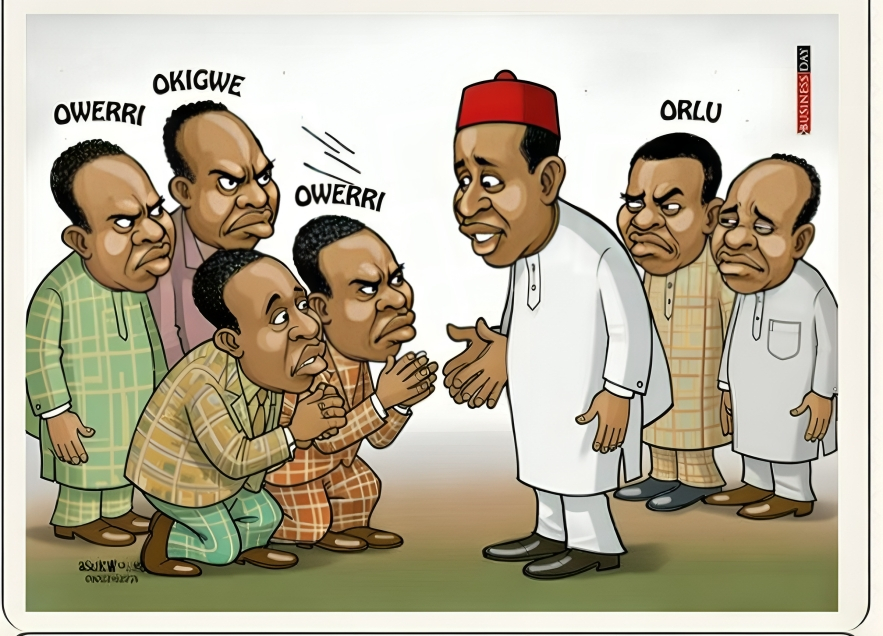
That template does not favour political heavyweights bloated with ambition and entitlement. Uzodimma’s pattern suggests a preference for calm, quiet, unassuming persons who talk less and threaten less. Big names across Owerri, Okigwe, and Orlu, many of whom assume inevitability, are likely to be disappointed. He does not empower those who are already overfed politically and economically.
The evidence is empirical. His last two deputy governors say it all. Placid Njoku was meek, humble, and devoid of political baggage. Chinyere Ekomaru, the current deputy, is similarly quiet and unassuming, a former lecturer rather than a political warlord. Owerri zone must internalise this lesson. If the zone truly wants the governorship, it must abandon illusion, refine its strategy, and move its aspiration with precision, discipline, and style. Anything less will be fatal.