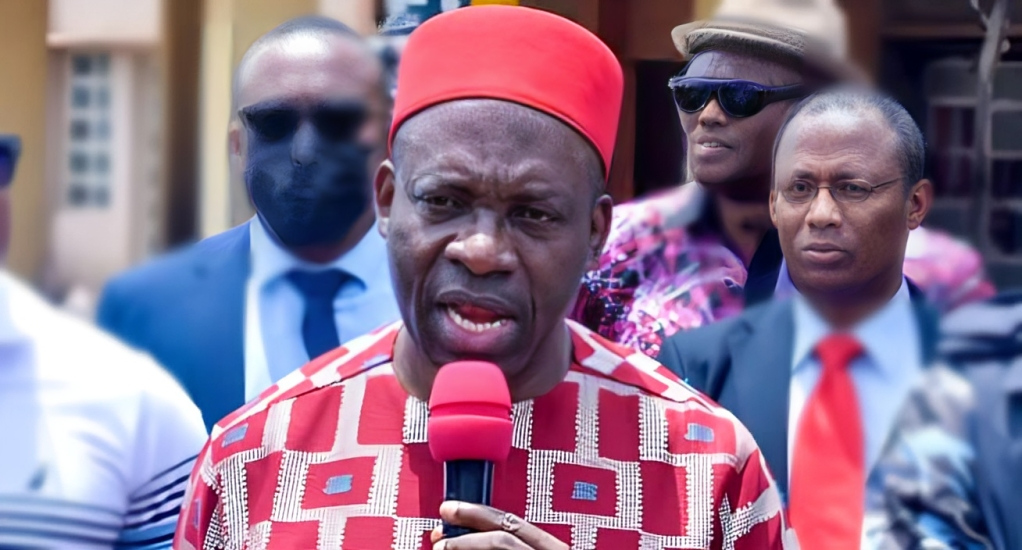
Governor Charles Soludo’s order shutting the Onitsha Main Market for one week was framed as a response to “economic sabotage.” But that framing misses the point—and, in doing so, risks misreading the mood of the people whose livelihoods power Anambra’s economy.
The Monday sit-at-home observed by traders is not driven by insecurity. It is not fear of violence, nor anxiety about safety. It is, rather, a deliberate and symbolic protest—an expression of collective displeasure over the ordeal of Mazi Nnamdi Kanu.
Kanu, the detained leader of the Indigenous People of Biafra, is currently serving a life sentence at Sokoto prisons following his conviction on terrorism-related charges last year by Justice James Omotosho of the Federal High Court, Abuja. That outcome has left a deep scar in the South-East, particularly among traders who see his fate as emblematic of political abandonment.
At the heart of the protest is anger—not at the market, not at commerce, but at political elites. Traders have repeatedly questioned why leaders from the region, including South-East governors, have appeared indifferent, or at best muted, in the face of Kanu’s prolonged ordeal.
The sit-at-home, therefore, is not an attack on the economy. It is a message to power. A costly one, yes—but intentionally so. When people choose to lose money to make a point, they are not being coerced; they are communicating.
To respond to that message by shutting markets is to answer protest with punishment. It may demonstrate authority, but it does little to foster understanding. You cannot fine dissent out of existence, nor decree emotional closure.
Markets are spaces of transaction, but they are also spaces of sentiment. The Onitsha trader is not politically naïve. He reads the room, weighs the symbols, and reacts accordingly. To dismiss his action as sabotage is to underestimate his agency.
There is also a troubling contradiction in the logic of the order. If traders are accused of shutting down commerce, what does it say when government shuts it down completely? The line between discipline and contradiction becomes thin.
What is unfolding is not an economic rebellion, but a political commentary. Traders are using the only language they believe is still audible to those in power—withdrawal. Silence. Absence.
If the concern is truly economic revival, then engagement, not enforcement, is required. Dialogue with market leaders, honest conversations about the limits and responsibilities of regional leadership, and a more visible political empathy over Kanu’s case would speak louder than any closure order.
Governance is not only about authority; it is also about reading signals. The Monday sit-at-home is a signal—uncomfortable, inconvenient, but unmistakable. Ignoring its meaning while punishing its form may only deepen the disconnect.
In the end, markets will reopen fully not because they are compelled to, but because those who trade within them feel heard, respected, and reassured that their leaders have not entirely looked away from what they consider a defining injustice.
*Duruofia writes from. Awka