History occasionally writes itself in thunderbolts.

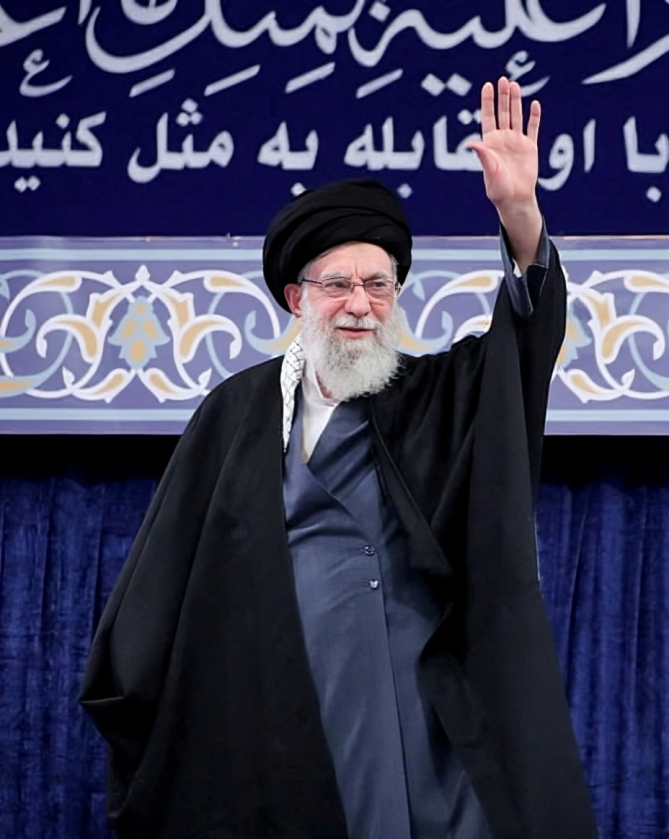
On 28 February 2026, the world witnessed a seismic moment in global politics: Iran’s Supreme Leader, Ayatollah Ali Khamenei, was killed in a joint U.S.–Israeli airstrike on Tehran, a report confirmed by Iranian state media and U.S. and Israeli officials.
For more than three decades, Khamenei had stood at the apex of Iran’s theocratic order, wielding near-absolute control over politics, the military, the judiciary, and foreign policy. His rule was a bridge from the revolutionary zeal of 1979 into an era marked equally by ideological rigidity and regional conflict.
Under his watch, Iran became a formidable force in the Middle East — not just by geography, but through proxy influence, entangling itself in Syria, Lebanon, Iraq, and Yemen. To allies, he was a stalwart leader; to many within Iran, as well as Western powers, he was a symbol of repression.
Inside Iran, Khamenei’s legacy was marred by repeated crackdowns on dissent: from the Green Movement protests in 2009 to the more recent popular uprisings led by young Iranians demanding economic opportunity and social freedom. State security forces answered these cries with brutality — imprisoning, injuring, and even killing thousands.
The conflict that culminated in his death was born of long-standing tensions over Iran’s nuclear ambitions, its support for armed groups hostile to U.S. and Israeli interests, and its intolerance for political pluralism. Those tensions, unresolved for years, finally exploded into open warfare, with Operation Epic Fury delivering the strike that brought Khamenei’s rule to an abrupt end.
For leaders of authoritarian states and entrenched regimes — whether in Tehran, Pyongyang, or anywhere else — there is a lesson here that transcends geography: power that ignores the will and welfare of the people carries the seeds of its own destruction.
In an age where modern rebellions are waged not only in streets but in cyberspace and in the ballot box, the illusion of permanence has been shattered. Tyrannies can bend the will of citizens for decades, but ultimately, they cannot indefinitely silence calls for dignity, justice, and inclusion.
Khamenei’s death also underscores an uncomfortable reality: oppression is not merely a domestic ailment. It eventually becomes a foreign policy liability — a justification for intervention, sanctions, containment, or, as in this case, military action backed by powerful adversaries. The global stage does not tolerate a vacuum of accountability forever.
Critics may debate the morality of the U.S.–Israeli strikes, but they cannot ignore the broader context: a leader whose longevity was measured in decades also presided over deep unrest, widening inequality, and political suffocation. His end did not come from within the ballot box — in free, fair elections — but from the compounded consequences of rigid governance, chronic repression, and international isolation.
And yet, in the streets of Tehran, reports surfaced of Iranians who celebrated — not for the violence of war, but for the symbolic end of an era many felt had shackled their potential.
There is a wider truth here: power belongs to the people, not merely by right, but by force of numbers, resilience, and collective conscience. Wall Street may shape markets; Riyadh may command oil; Beijing may project financial might — but no ruler, however fortified, stands unchallenged when citizens choose to reclaim their destiny.
For Africa, Asia, and every continent where leaders whisper that authority is bestowed by divine right or ethnic heritage, let this moment serve as a warning: legitimacy flows from consent, not coercion. Oppression does not cement loyalty — it breeds resistance.
In the end, history will judge Khamenei not by the missiles that ended his life, but by the millions of Iranians who lived under his rule and continue to demand a future of autonomy and dignity. That is the real reckoning of leadership.
And for all those who cling to power by trampling on the voice of the people: beware. No reign is everlasting, and no leader is beyond the judgment not only of his own citizens, but of history itself.