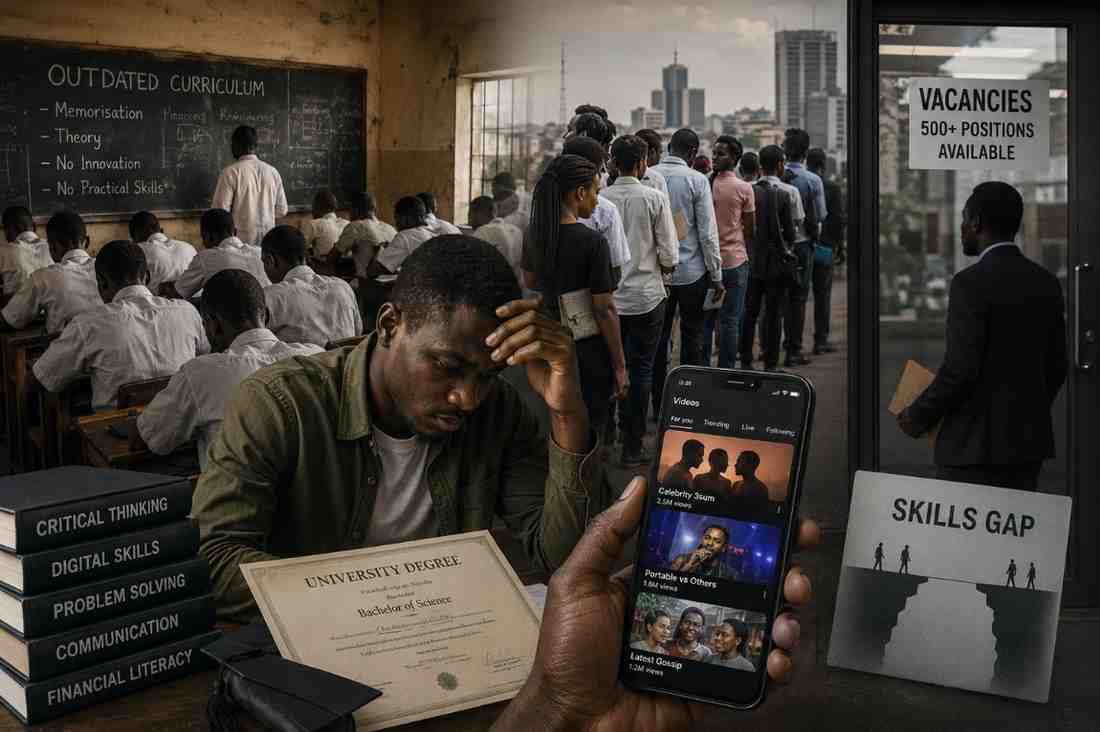
When Tosin Eniolorunda, the 40-year-old chief executive officer of Moniepoint, disclosed during a forum in Lagos recently that his company had more than 500 vacancies it could not fill because qualified Nigerians were difficult to find, his remark struck at the heart of one of the country’s most uncomfortable realities. In a nation battling mass unemployment, the inability of employers to recruit competent workers reveals a widening disconnect between education, skills and the demands of the modern economy.
For years, unemployment has been discussed almost exclusively as a problem of inadequate job creation. While that remains true, another crisis has quietly emerged alongside it: the growing shortage of employable skills among many young Nigerians. The implication is troubling. Even where opportunities exist, a significant number of applicants are unable to meet the standards required in today’s competitive labour market.
The concerns raised by Mr Eniolorunda are neither isolated nor exaggerated. Across sectors such as technology, finance, engineering and digital services, employers increasingly complain about the scarcity of candidates with practical knowledge, analytical ability, communication skills and professional discipline. This challenge persists despite the millions of graduates produced annually by Nigerian universities and other tertiary institutions.
At the centre of the problem lies a deeply troubled education system. Public examinations have steadily lost credibility due to widespread malpractice, while admission processes are often compromised by corruption and influence. Many students gain entry into higher institutions without the academic foundation necessary for rigorous learning. Universities, already weakened by poor funding, outdated infrastructure and incessant strikes, struggle to provide the quality education required for a rapidly changing world.
Equally concerning is the disconnect between academic curricula and present-day realities. In an era driven by technology, innovation and digital skills, many institutions continue to rely on obsolete teaching methods and theoretical content with limited practical relevance. Students graduate with certificates, yet lack exposure to problem-solving, critical thinking, entrepreneurship and modern workplace demands.
Beyond the classroom, social behaviour and cultural values have also contributed to the crisis. The rise of social media has created an environment where entertainment, celebrity culture and instant gratification often overshadow intellectual development and personal growth. Many young people now spend significant time consuming content that offers little educational or professional value, while reading culture and serious self-development continue to decline.
The growing glorification of internet fraud and other forms of questionable wealth further complicates the situation. In some communities, financial success is celebrated without scrutiny of how it was acquired. This has encouraged a dangerous mindset among sections of the youth population, where shortcuts are preferred to hard work, and visibility is valued above competence. Such attitudes inevitably weaken the culture of discipline and merit that productive societies require.
However, the responsibility does not rest solely with young people. Parents and guardians also have an important role to play. Many families remain excessively focused on examination scores and certificates, while paying insufficient attention to practical skills, character formation and intellectual curiosity. Yet the global economy increasingly rewards creativity, adaptability, digital literacy and the ability to solve real-world problems.
The reality is that the future workforce will be shaped not merely by formal education, but by continuous learning and practical competence. Children and teenagers must therefore be exposed early to productive use of technology, financial literacy, communication skills and critical thinking. Schools alone cannot achieve this objective without active parental involvement and broader societal support.
Government, too, must confront the urgent need for educational reform. Investment in modern learning facilities, teacher training, technical education and digital infrastructure can no longer be delayed. Nigeria cannot hope to compete globally with an education system that prepares students for a world that no longer exists. Policies that encourage innovation, vocational training and industry collaboration are essential if the country hopes to close the widening skills gap.
The warning from Moniepoint should serve as a wake-up call. Nigeria faces the risk of becoming a country where unemployment and labour shortages exist side by side — not because opportunities are absent, but because too many young people are inadequately prepared for them. Reversing this trend will require serious commitment from government, schools, families and the wider society. The country’s future competitiveness may well depend on how urgently that challenge is addressed.