As Nigeria marks 66 years of independence on October 1, 2026, there is a tendency to measure the country largely by what has gone wrong, what has been lost and what remains undone.
There is certainly enough to worry about. But an anniversary is also a moment to pause, look back and acknowledge how far the country has travelled.
Nigeria of 1960 is not the Nigeria of 2026.
The country has grown enormously in population, expanded its educational institutions, developed a sophisticated financial and telecommunications system, produced globally recognised entrepreneurs and creative talents, built new infrastructure and sustained civilian democratic rule for the longest uninterrupted period in its history.
The journey has not been perfect.
It has been uneven, sometimes painfully slow and occasionally interrupted by crises. Yet, measured against where the country started, there are substantial gains for which Nigerians can legitimately thank God.
One of the most obvious is Nigeria’s population growth.
At independence, Nigeria had a population estimated at about 45 million. Today, it has a population of more than 200 million and is one of the world’s largest countries by population.
Population is often presented only as a challenge, particularly when measured against the country’s infrastructure and social services. But a large and youthful population is also a huge economic asset. It provides a vast consumer market, a large labour force and an enormous reservoir of human capital.
Nigeria’s population has also helped make the country an important destination for investors and international businesses seeking access to one of Africa’s largest markets.
The challenge is to convert this demographic strength into productive economic power.
Nigeria’s natural resource endowment is another reason for gratitude.
Crude oil may have dominated the national conversation for decades, but petroleum is only one component of Nigeria’s enormous resource base.
The country possesses deposits of limestone, coal, iron ore, tin, gold, lead-zinc, bitumen and other minerals. It also has extensive agricultural land, forests, rivers, wetlands and diverse ecological zones capable of supporting a broad range of agricultural activities.
This resource diversity has always provided Nigeria with opportunities beyond petroleum. The growing attention to agriculture, solid minerals and other non-oil sectors shows that the country’s economic possibilities extend far beyond crude oil.
Another remarkable transformation has taken place in education.
At independence, Nigeria had only a handful of higher institutions.
Today, the country has hundreds of universities, polytechnics, colleges of education and other tertiary institutions.
That expansion has produced generations of graduates, professionals, researchers, teachers, doctors, engineers, lawyers, accountants, journalists, scientists and other specialists who have contributed to Nigeria and countries across the world.
The quality and accessibility of education remain important areas for further development, but the expansion itself represents a major national transformation.
Nigeria’s indigenous enterprise is perhaps one of the most impressive stories of the post-independence era.
Nigerians have demonstrated extraordinary capacity to create businesses under difficult circumstances.
From banking and telecommunications to manufacturing, construction, transportation, agriculture, technology, hospitality, entertainment and retail, indigenous entrepreneurs have built businesses that employ millions and generate economic activity across the country.
Some Nigerian companies have grown from modest beginnings into major national and international enterprises.
The story is even more remarkable at the level of micro, small and medium-sized enterprises. Millions of Nigerians have created businesses to provide goods and services, employ workers and sustain families.
This entrepreneurial spirit is one of Nigeria’s greatest economic assets.
Then comes the development of democratic governance.
Nigeria’s political journey since independence has been turbulent. The country experienced the First Republic, military interventions, a civil war and prolonged periods of military rule.
But since the return to civilian government in 1999, Nigeria has maintained an uninterrupted period of civilian democratic rule.
That continuity is significant.
It has allowed political institutions, civil society organisations, professional associations, the media and citizens to operate within a democratic framework.
Nigeria’s democratic space has also become considerably more vibrant. Citizens openly criticise governments and public officials.
Civil society organisations campaign on public issues. The media scrutinises those in authority. Political parties compete for power and citizens participate in elections.
There is still considerable room to strengthen democratic institutions, but the continuity of civilian rule remains an important gain.
Perhaps no sector demonstrates Nigeria’s transformation more dramatically than telecommunications.
At independence, access to telephone services was extremely limited. Today, Nigeria has one of Africa’s largest telecommunications markets.
The Nigerian Communications Commission reported more than 194 million active mobile subscriptions by July 2026. The telecommunications sector has also become an important contributor to the national economy.
Mobile phones have transformed communication, banking, commerce, education, journalism, entertainment and social interaction.
The telecommunications revolution has simultaneously produced another major development: the digital economy.
Nigeria has become an important African centre for fintech, digital payments, technology start-ups and other technology-driven businesses.
The country’s young entrepreneurs are building businesses around problems that previous generations could hardly have imagined solving through technology.
The banking and financial services sector has equally undergone a remarkable transformation.
Nigeria has moved significantly beyond the predominantly cash-based financial environment of the past.
Commercial banks, mobile banking, electronic payments, agent banking and fintech platforms have expanded the ways in which Nigerians save, transfer and receive money and conduct business.
Financial technology has also created new opportunities for young Nigerians and helped Nigerian companies develop products for a rapidly changing economy.
Another gain worth celebrating is the expansion of manufacturing and industrial capacity.
Nigeria today has significant local production capacity in sectors such as cement, food and beverages, pharmaceuticals, fertiliser, petrochemicals and other industries.
The manufacturing sector recorded real year-on-year growth in the first quarter of 2026, according to the National Bureau of Statistics.
Industrialisation remains a work in progress, but the country has developed production capabilities that were considerably less developed at independence.
The growth of indigenous manufacturing and enterprise also demonstrates the capacity of Nigerians to build local solutions rather than depend entirely on imported products and foreign companies.
Nigeria’s creative industry is another extraordinary national achievement.
Nollywood has become one of the most recognisable names in global African entertainment. Nigerian music, particularly Afrobeats, has become an international cultural force.
Nigerian writers, comedians, fashion designers, actors, filmmakers and visual artists have similarly taken Nigerian culture to audiences around the world.
What began largely as an indigenous cultural expression has become a major international industry, creating jobs, attracting investment and projecting Nigeria’s cultural influence far beyond its borders.
The success of Nigerian creative talent has also demonstrated something important: Nigeria’s greatest export is not necessarily oil.
The country exports ideas, talent, culture, entertainment and human capital.
Indeed, the Nigerian professional diaspora is another achievement that deserves recognition.
Nigerians have distinguished themselves in medicine, science, technology, engineering, academia, law, finance, aviation, business, entertainment and other professions around the world.
From hospitals and universities to technology companies, financial institutions and international organisations, Nigerians continue to contribute to the development of other countries.
The Nigerian diaspora also maintains strong economic links with the homeland through remittances, investments, philanthropy, business relationships and professional networks.
There has also been substantial infrastructure expansion since independence.
The Nigeria of 2026 has a network of roads, bridges, airports, seaports, telecommunications infrastructure, housing developments and urban transportation systems that could hardly have been imagined in 1960.
The infrastructure deficit remains significant, but that should not erase the transformation that has occurred.
The same is true of aviation.
Nigeria has developed a sizeable aviation industry, with airports connecting major cities and Nigerian airlines providing domestic and international services.
Air travel, once largely beyond the reach of ordinary Nigerians, has become a significant part of national transportation and commerce.
Another area of gradual transformation is electricity and energy infrastructure.
Nigeria has expanded electricity access substantially over the decades and has begun to diversify its energy sources through natural gas, solar power, mini-grids and other alternatives.
The World Bank put Nigeria’s electricity access at about 61.2 per cent of the population in 2023. That figure also illustrates both the progress made and the considerable opportunity that remains.
But perhaps the most important Nigerian achievement cannot be measured in kilometres of roads, number of universities, mobile subscriptions or megawatts of electricity.
It is the resilience of the Nigerian people.
Nigeria has survived political crises, economic shocks, military rule, civil conflict, currency pressures, unemployment, infrastructure challenges and numerous other difficulties
Yet Nigerians continue to build.
They open shops, establish factories, create technology companies, produce films, write books, teach students, treat patients, cultivate farms, run transportation businesses, practise law, report the news, create music and establish organisations.
The Nigerian spirit has repeatedly demonstrated an extraordinary capacity to adapt.
That resilience has kept the country moving.
At 66, therefore, Nigeria is not where it ought to be, but neither is it where it started.
The country has travelled a considerable distance.
The task now is to ensure that the gains of the past six decades are not merely celebrated every October 1 but deliberately converted into greater prosperity.
Two things are particularly important.
First, Nigeria must invest more aggressively in human capital. Education, healthcare, technical training, digital skills and research should be treated as strategic national investments rather than recurrent expenditures to be managed down. A youthful population becomes an asset only when young people acquire the skills and opportunities to contribute productively to the economy.
Second, Nigeria must strengthen the institutions that convert national resources into public value. Transparent governance, predictable policies, effective regulation, infrastructure investment and support for productive enterprise can help transform the country’s enormous natural and human resources into sustainable economic growth.
The 66th anniversary should therefore be more than another ceremonial celebration.
It should be an occasion to acknowledge the distance travelled, appreciate those who built the foundations on which today’s Nigeria stands, and commit ourselves to consolidating the gains.
Nigeria’s story is not simply one of failures and disappointments.
It is also a story of survival, enterprise, creativity, institutional development and human achievement.
At 66, there is indeed much to glorify God for.
And there is even more responsibility on the present generation to ensure that the Nigeria inherited by the next generation is stronger, more productive and more prosperous than the one we inherited.
That should be the real meaning of independence at 66.
Happily enough, the president Bola Tinubu-led federal government is addressing critical issues.
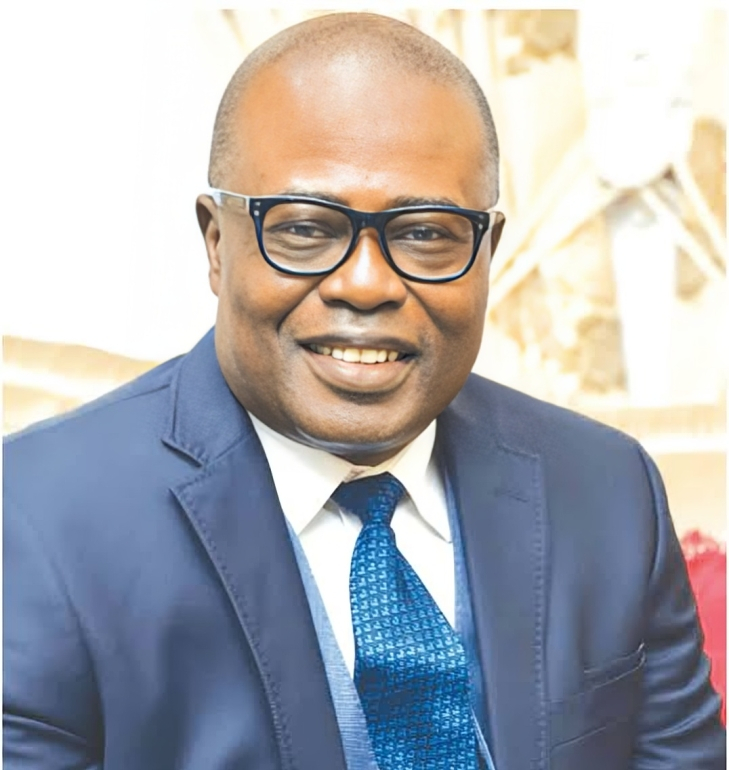
Prof Phillips Nto, former Commissioner for Finance and Economic Planning, Abia State is an APC chieftain.